Baibombeh Updates and Stories – Issue 2, November 2018

Grade 4 Geography of Canada Poster Project

By: Michael Tokarz, Grade 4 Teacher

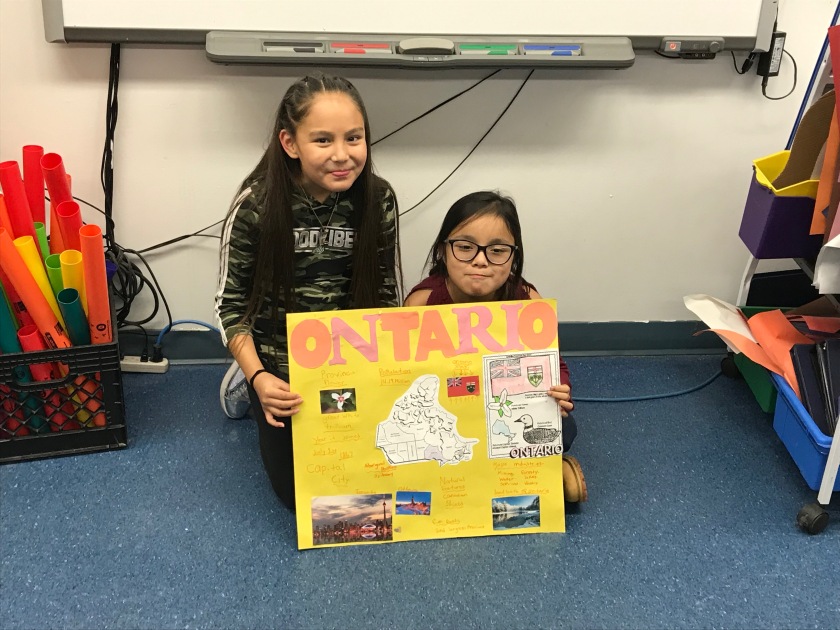
During the month of October, Grade 4 students completed a social studies unit on Canada. They learned about the different regions in Canada and completed a poster research project based on one province or territory in which they then presented to the rest of the class.
Version 2
Teagan Lowe and Jazlyn Copenace putting their poster on display (Photo credit: Michael Tokarz)

Sagaate Ranville completed his project on British Columbia. “I learned that British Columbia is the third largest province and the most westerly province in Canada,” he said.

I’m very proud of the effort they put forth into researching some of the basic facts of their province/territory.


Grade 5 Pumpkin Carving

By: Lillianna Taylor White

It was a gushy day in the Gr. 5 classroom on October 23rd as we carved out pumpkins. We used a big spoon, our hands and knives to remove the insides.
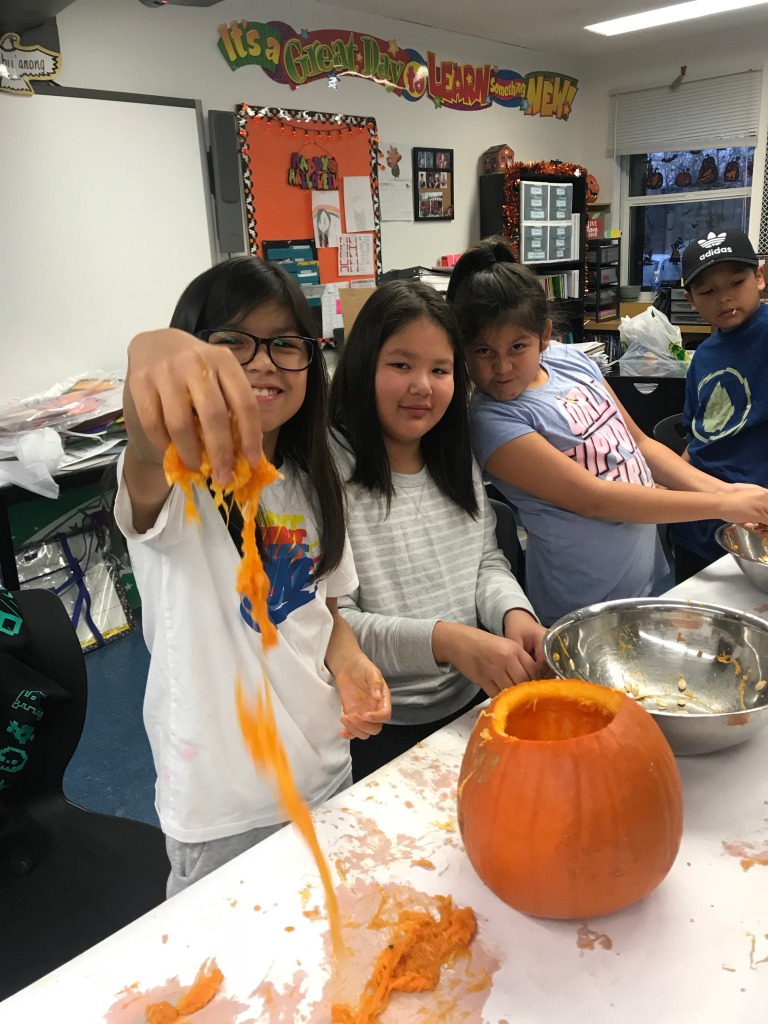
Photo Credit Charlene White 2
A student displays the viscosity of a pumpkins interior (Photo Credit: Charlene White)

We were separated into groups because there were only four pumpkins.

The pumpkin was slimy inside. It was gross. Our teacher, Charlene White, asked Breanna and Cody to cut out the top for us.

There was a lot of pumpkin guts but we kept the seeds, washing them in water.

The seeds were going to be cooked, but that never happened because it was so busy. We were all over the place and our teachers were busy so we had to clean all by ourselves.

In an interview, Ms. White said the idea came from when she taught grade 4 a few years back. She says it was to see what pumpkin can offer us.

She said she was disappointed that we ran out of time that day and couldn’t roast the pumpkin seeds. “It would have been an opportunity to let them try it,” she said. “You can put flavor on pumpkin seeds like salt and vinegar or ketchup flavor.”      

We did do a draw to see who got to take the pumpkin home.


Halloween Costumes

By: Jerrah Chesson

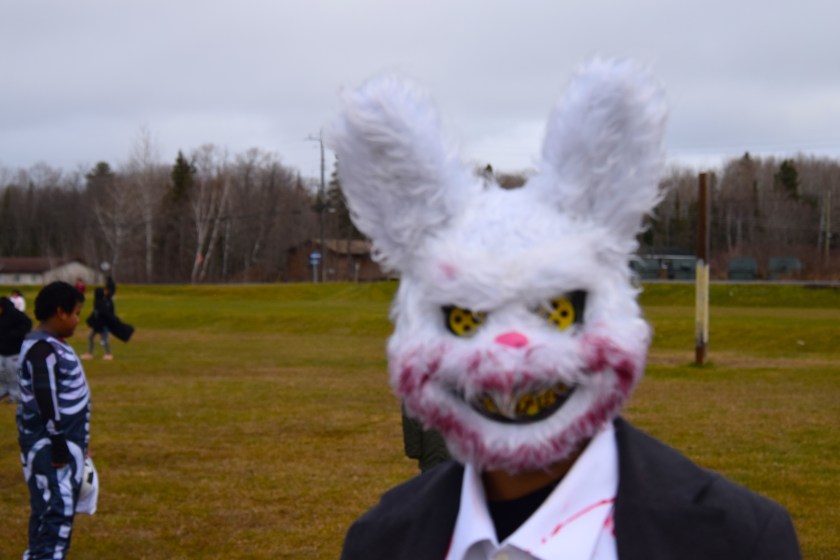
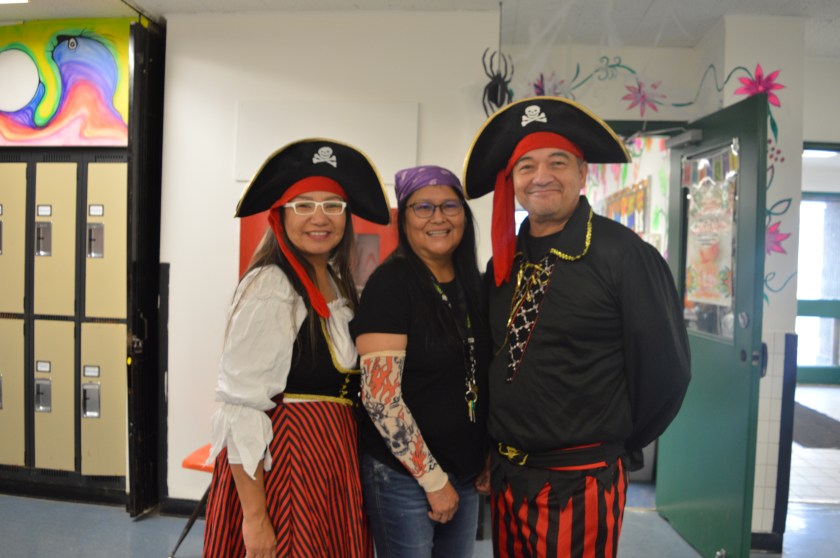
On Halloween, the costumes were cool and scary at Baibombeh School, when participants met in the gym for a costume contest.

In grade 5, Lilli was Samara from The Ring, Charlie was Pennywise the dancing clown, Hayden and Dominika were skeleton figures. I was in a black suit with glowing glasses. We also watched a movie and it was really scary.
Caidy1
Principal Eric Wilson and two teachers dress as pirates (Photo Credit: Caidy Indian)

“This year there was a zombie walk and I was one of the zombies,” said Dominika Oshie. “It was really awesome and really fun.”


Grade 6

The Emotionless Girl  

By Emma Tom Paypompee

Gr. 6

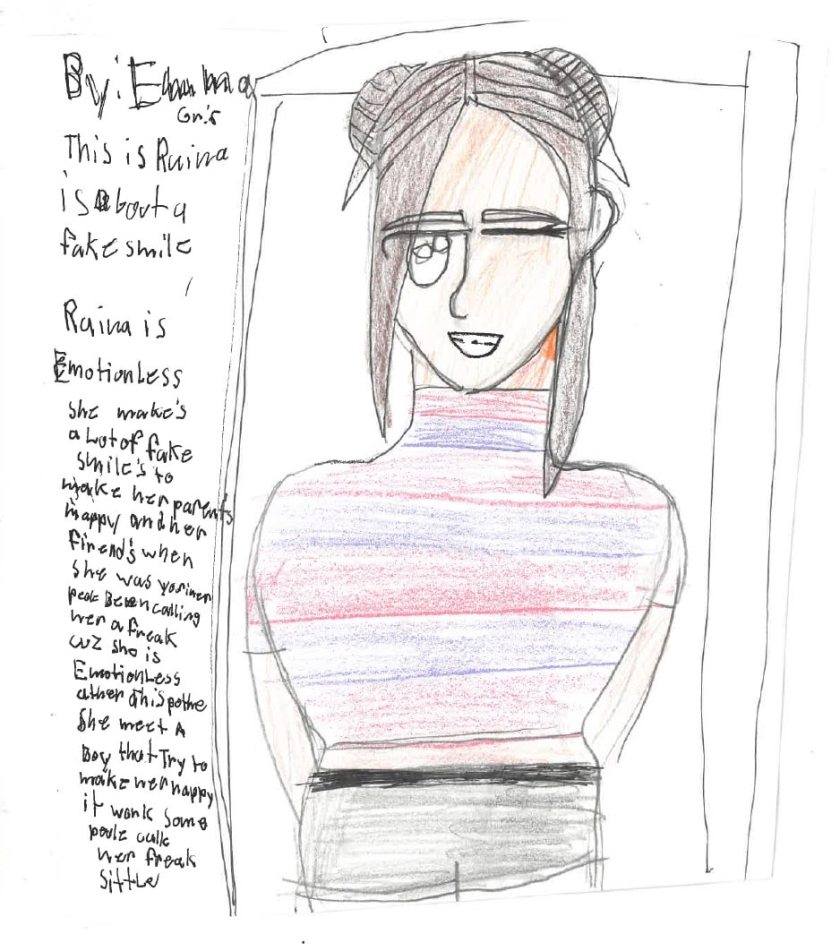
Raina is emotionless. She makes a lot of fake smiles.

She is 17 years old. She wants to make people happy so she pretends she has emotions.

When she was 13, people called her a freak because she was emotionless. When she was 15 she made four friends. Her friends would bully her and some didn’t want her to be her friend anymore. When she was about 16, she stopped acting that she had emotions. This made her parents sad.

She is 17 now – almost 18. She has a boyfriend now and he is kind. He teaches her two emotions, sadness and happiness. She told her parents and they are happy. She is happy. She is making new friends. She now has about six friends. Her boyfriend is happy that she has made a lot of friends. They teach her how to not be shy.

Her mother bought a house for her and her boyfriend. Her dad gave her money to buy food.

She is almost 19. When she is 19, she is going to look for a job.

She wants kids. She hopes her kids are not emotionless. She will try to teach her or him emotions.

Three years later, she is 21. Now she has a kid who is one year old. The kid is not emotionless, but she can read minds.

She is 30 and her kid is now nine. Her kids’ names are Kate, Jack and Sky. Kate is oldest, Jack is six, and Sky is two years old.

People call Kate a freak because she can read minds. Raina told her people called her a freak because she was emotionless.
Emma Tom
Emma’s original drawing


Gr. 6 Poetry

One Wish

By Virginia Loon

Virginia Loon Art
Virginia’s original drawing


If I had one wish, I’d wish for thirst of knowledge unequaled by anything in my life.

Then I’d study, and nothing would stop me.

I’d learn French, German, Latin and Greek. I’d know a bit of Japanese and some Spanish, enough to get by.

I’d study molecular biology and physics, simply because they interest me.

I’d take judo, yoga, and taekwondo and the philosophies behind them.

I’d learn as much geography as I could but not the names: economics, industry, politics, religion.

I’d read about history, but not just the what and when, the who, the why, the how.

And no one would know. It would be me on my own, behind my jester’s mask.

I’d be happy.


The Story of Misuzu Sempai

By: Gwen Paypompee, Gr. 6

My name is Sempai-Chan. I am 17 years old.  I am known as the bookworm. My story is about my powers.  Funny, eh? No one really wanted to be friends with me just because of my powers.

My powers are mind-reading and I can actually read your mind!  I really hope we can be friends. I actually have blue hair, with bright green eyes.

Everyone at the Akademi has brown, blonde, black, any type of normal hair colors (unless if they dye their hair, it’s still normal) and normal eye colors too! Oh, did I tell you?  I’m half wolf! No, eh? Well, I really am half wolf!

I love it in the winter times, all the white snow, the cherry trees covered up in snow, so much more! But sadly, almost everyone at the Akademi bullies me. It became a bit physical ever since I got to middle school. Back in Italy I made friends. Now back here in Japan.
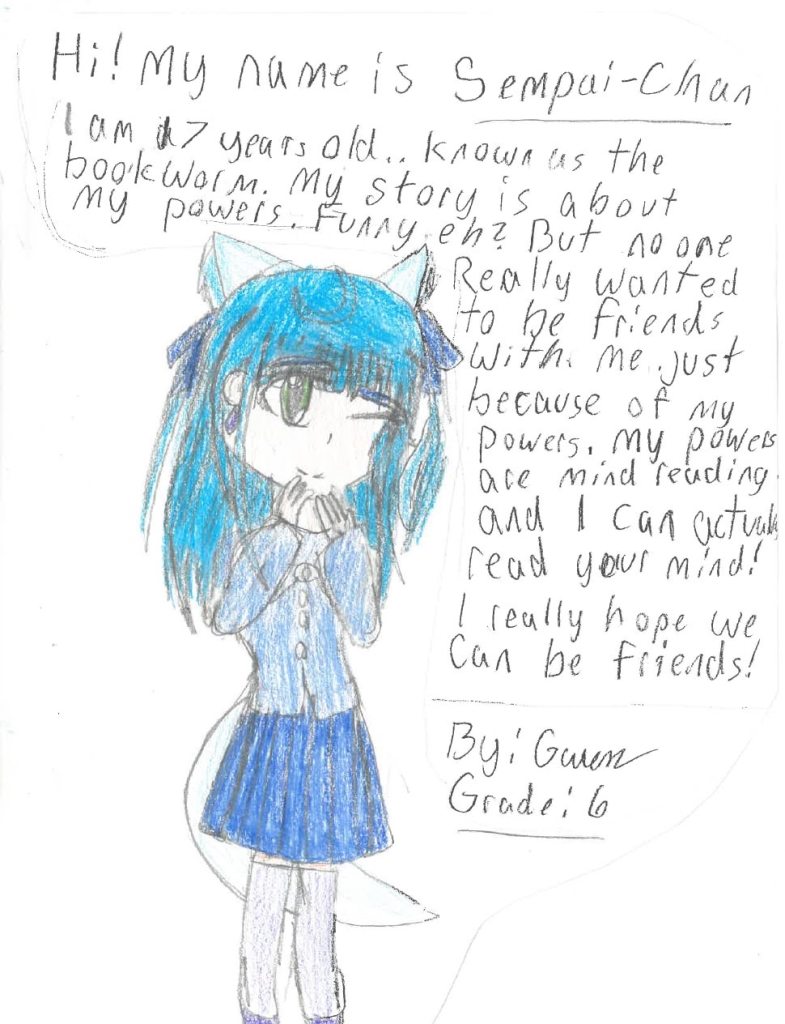
Gwen
Gwen’s original drawing


Make Sure Your Student Has Set a Goal

By: Ian Crow

First day of high school sets the path for all students. Registration isn’t just a day to sign up to attend. Registration could be the most important day for a student. When transitioning from junior high to high school, students have to have a goal in place. A student should be able to describe to the registration staff his or her learning objectives.

Starting school with a blank transcript only happens once. Grades have yet to be given. Grades given for each course at the end of the semester could have a positive or negative impact on a student’s career choice.

Perhaps a student enters into an elective in the third I am not sure what Ian means by the third semester semester and realizes, when it’s too late, that he or she is in the wrong course. They may find that they do not meet the criteria for entering their preferred program when they register for post-secondary programs. This is why it’s important for a student to know what they want to do in life.

When a student receives 30 consecutive credits in high school, he or she will have graduated “on-time”. These could be students who know what they want to do in life and have prepared themselves for further studies and ultimately a career.  

Students may, at times, decide to take a slow and steady path, stretching their time spent in school. There is nothing wrong with that, as long he or she is pondering life choices and are headed in the right direction. Students have until the age of 21 to graduate conventional school. Accelerated education is preferred amongst most educators, simply for quality of life purposes. Time spent in school should be kept at a minimum. Youth should experience more in life rather than staying in high school for an extended amount of time.

It is in the best interest of the student that they have a goal. Educators work well with students who have a plan. Deciding what work to assign and courses to offer is paramount to any educator.  To stray off a student’s chosen path would be a waste of everyone’s time and efforts.

Equipping a student with the necessary tools to continue his or her educational path is a priority for Baibombeh Anishinaabe School. We wish to provide confidence in their choices and inspire them to work hard on a regular basis.  We wish to open their minds and provide them guidance when it comes to choosing a path. A student’s journey begins with their aspirations. Doors are opening all the time. Students must grasp their dreams and work towards them.


Veteran George Crow

By Damon Hunter

For this year’s Remembrance Day, Cody Crow submitted photos and information about his father, George Crow. A poster hangs in the school in his honour. His father, George, was born on March 12, 1940 in Morson, Ontario.

At the age of 29, George signed up with the US Army. Stationed in Germany, he trained recruits to operate tanks. After the war he came back a hero. He was elected chief, and had also taken on the duties of councilor.

He enjoyed singing alongside the community country music club and was regarded as a talented artist.


Girls Wanted: 2018-2019 Curling Season has Begun

By: Sharia Yomi

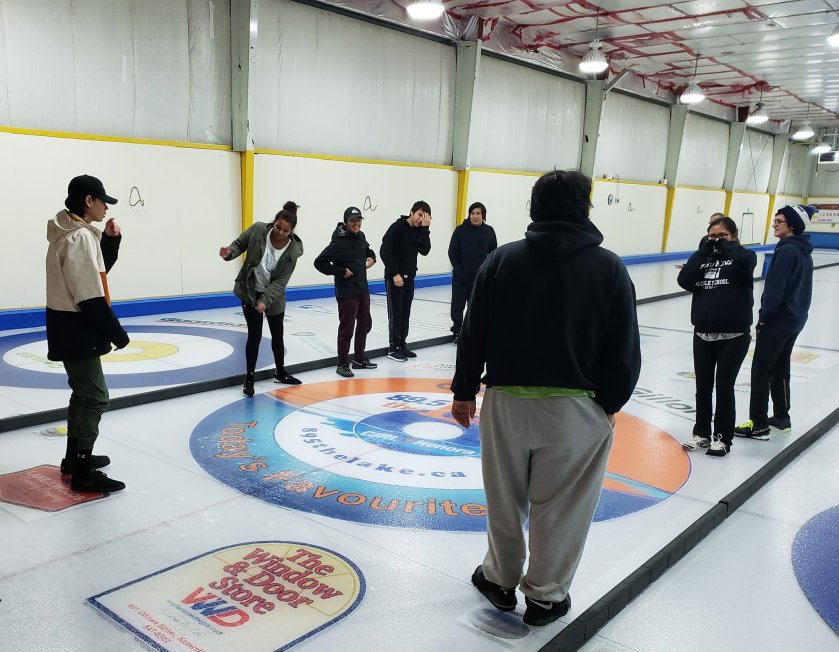
We had our first curling practice on Tuesday, November 13th. Team members Danton Monias, Corban Crow, Connor Kakeeway, Drayston White and myself are trying out our first year in NORWOSSA Curling League.
Roland White 2
Members of the Curling Club await practice for this year’s league (Photo Credit: Roland White)

As for the rest of the team members, Ireland Bird, Xavier Ranville, and Adam Skead, this will be their third year in the League.

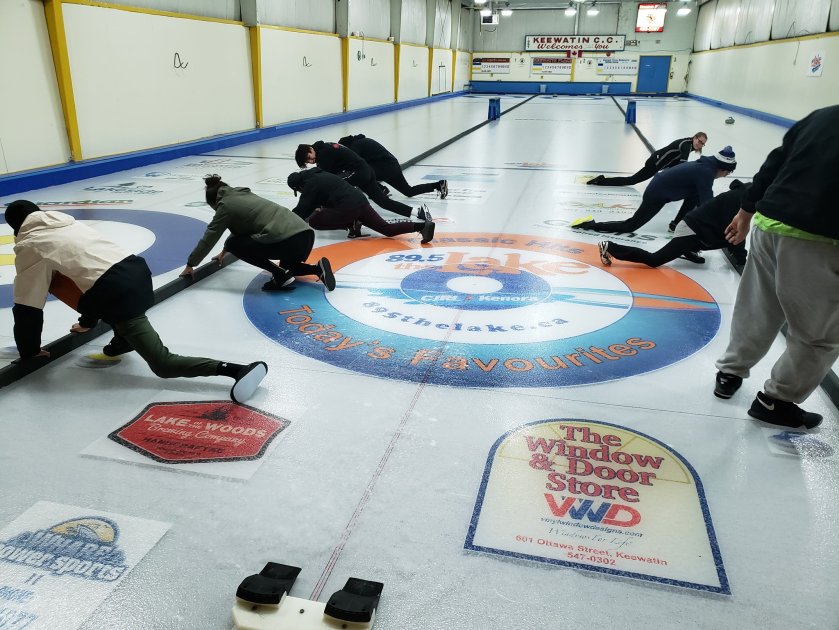
Our coaches, Brooke Swoffer and Jordan Marchand, have taught some of our new members how to slide with sliders. It was not easy at first, but the team got the hang of it.
RolandWhite-Keewatin Arena1
Members of the Curling Club warm up (Photo Credit: Roland White)

We only have two girls on our team. I suggest more girls or women should come on out and join our junior and senior curling teams.


Music Club 2018/2019

By: Mike Tokarz

Baibombeh Grade 4 Teacher/Music Coordinator

This school year, Baibombeh Anishinabe School is proud to be able to offer a musical program to our students. Through funding over the last couple of years, we were able to purchase a wide assortment of instruments, from trumpets, trombones, flutes, clarinets, alto saxophones, violins, guitars, drums, percussion, and keyboards.
Michael Tokarz-Jaslyn Copenace
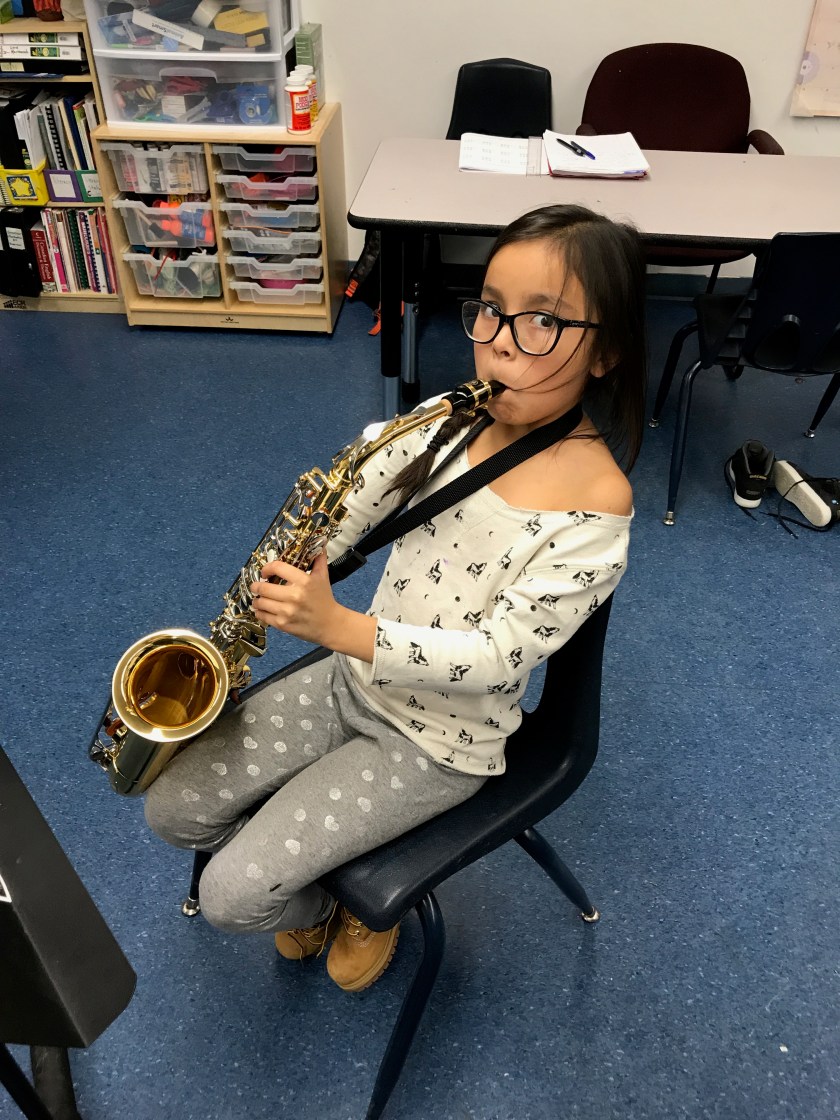
Jazlyn Copenace plays the saxophone (Photo Credit: Michael Tokarz)

The Grade 4 classroom is home to all of these instruments and they can often be heard in the afternoon from both ends of the school. The program is available to students from Grades 4 to 12. Students are currently working on learning to operate the instrument as well as proper posturing. We are also preparing for this year’s Christmas Concert.

I myself have played Alto Saxophone all my life and I look forward to passing on my knowledge of classical music to future generations and helping this program continue to grow and thrive in our school.

Jazlyn Copenace is working on learning how to play keyboard and alto saxophone in Music Club.  “Music Club is really fun. I’ve always wanted to learn how to play an instrument,” she said. “I hope to start a band in the future.”

All members of the community are welcome.

Music Club Weekly Schedule

Monday – Grade 4 Music Club – 12:20 to 12:50pm

Wednesday – Grade 5 Music Club – 12:20 to 12:50pm

Thursday – Grade 6 to 12 Music Club 12:20 to 12:50pm  – Grade 4 to 12 Music Club 3:30 to 4:30pm
 

Snap, Crackle, Pop! Wild Rice Harvesting at Cultural Camp at Whitefish Bay

Elders and youth come together for a three-day cultural knowledge sharing camp at Naotkamegwanning Roundhouse

JasmineCopenance13Gr3
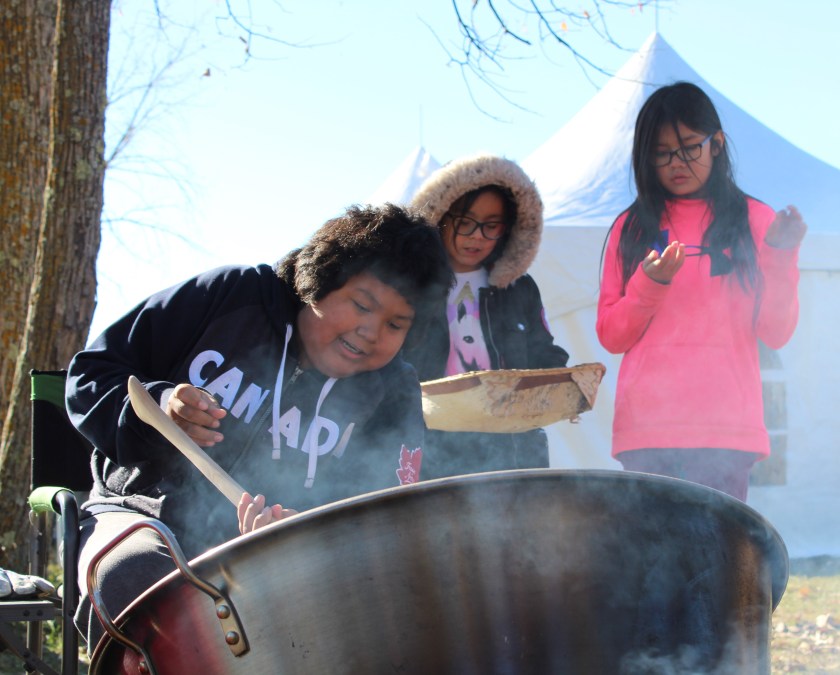
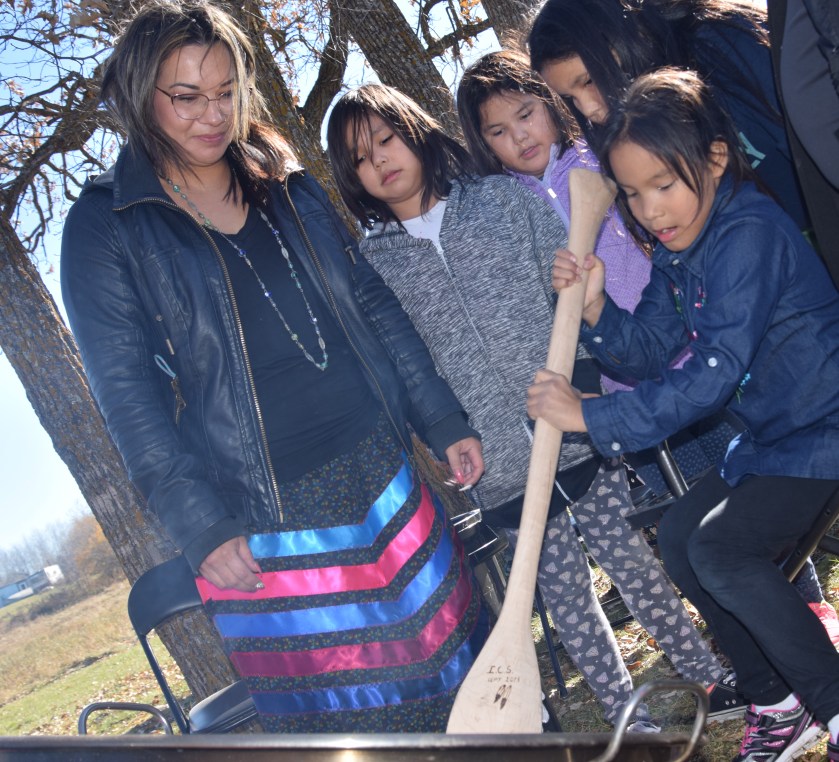
Kelly Kavanaugh watches a child stir wild rice (Photo Credit: Jazlyn Copenace)

By: Carter Nash, West Ranville, Jaryn Joseph, Arianna Jack

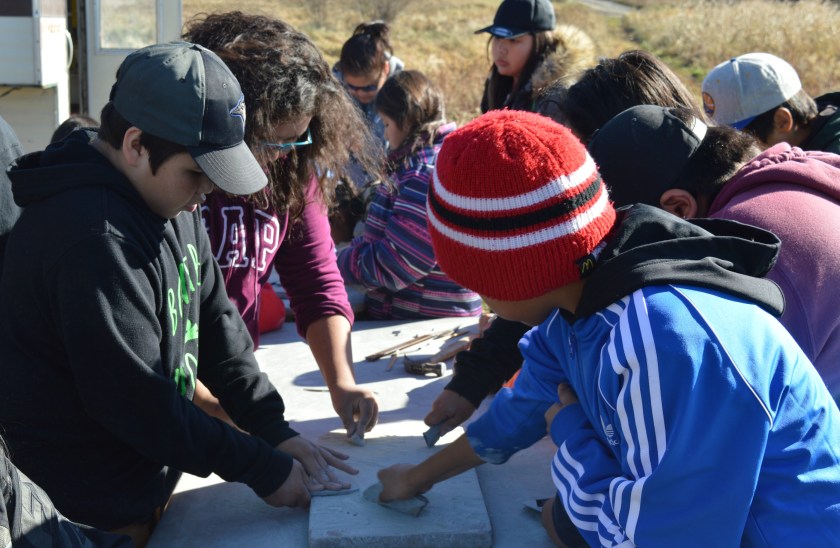
The sound of drumming, the smell of smoke, the scraping of rock, and the popping of wild rice were sights and sounds of pride at the Naotkamegwanning roundhouse.

Dylan Jennings was one of many cultural trainers parching or harvesting  wild rice at the first annual Shawendaasowin Cultural Camp held on October 23-25, 2018.

VirginiaLoon-Jennings
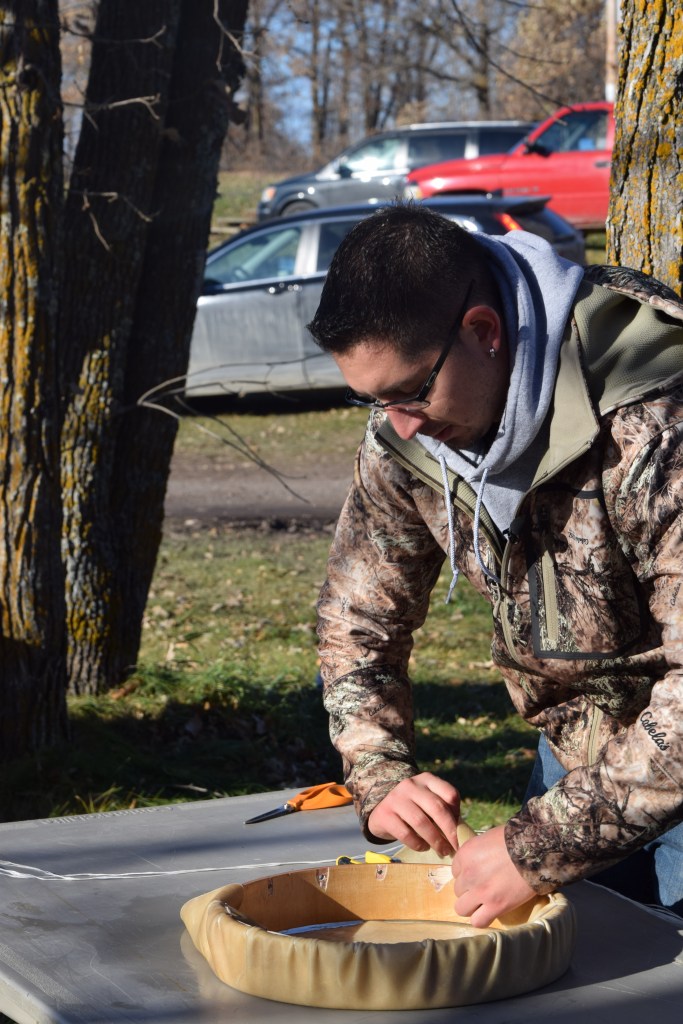
Dylan Jennings makes a traditional handheld drum (Photo Credit: Virginia Loon)

Jennings, or Maskode Bizhikiins, (Little Buffalo) of  Bad River Band of Lake Superior says he started harvesting as a young person.  “I was probably 10 or 11 when I went out harvesting with my cousin,” he explained.  His grandma, aunties and uncles taught him how to harvest manoomin.

Virginia Loon
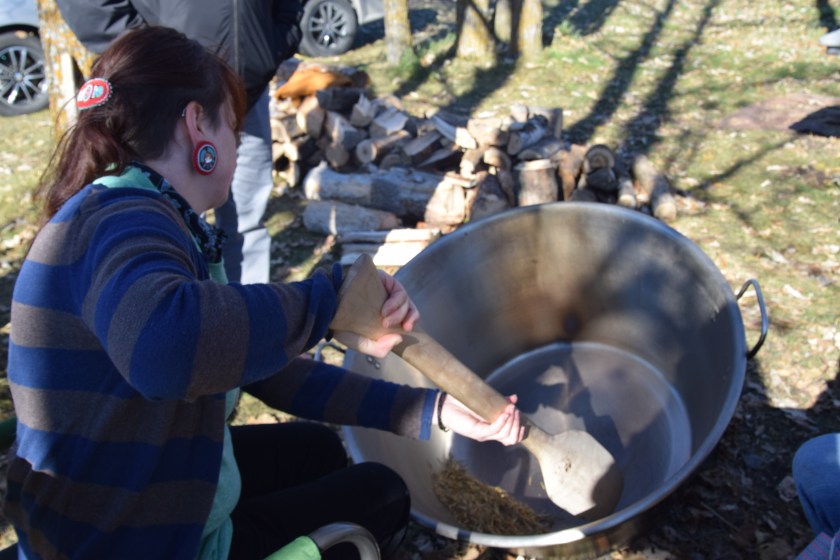
Youth stirring wild rice (Photo Credit: Virginia Loon)

As part of his identity as Anishinaabe, he said, “Harvesting connects everything in creation.”   He remembers important virtues such as patience, respect and love.

“Harvesting wild rice is a lot of work, but necessary,” said Jennings.  “It makes us hard and honest workers when we remember how to do things the old way. It also helps to keep us grounded and humble.”

Jazlyn Copenance
Karli Zschogner, journalism trainer stirring wild rice (Photo Credit: Jazlyn Copenance)

Jennings said he enjoyed the dialogue between the young people and elders. “It was invaluable to hear the experiences of the elders and the way they used to harvest and live.”

He said he enjoyed being in the community and sharing his knowledge. He was happy that Shawendaasowin invited him.  “The community is truly blessed with so many great teachers, young people and knowledgeable elders,” said Jennings.

1st- Oct23-25 Cultural Camp - Virginia Loon
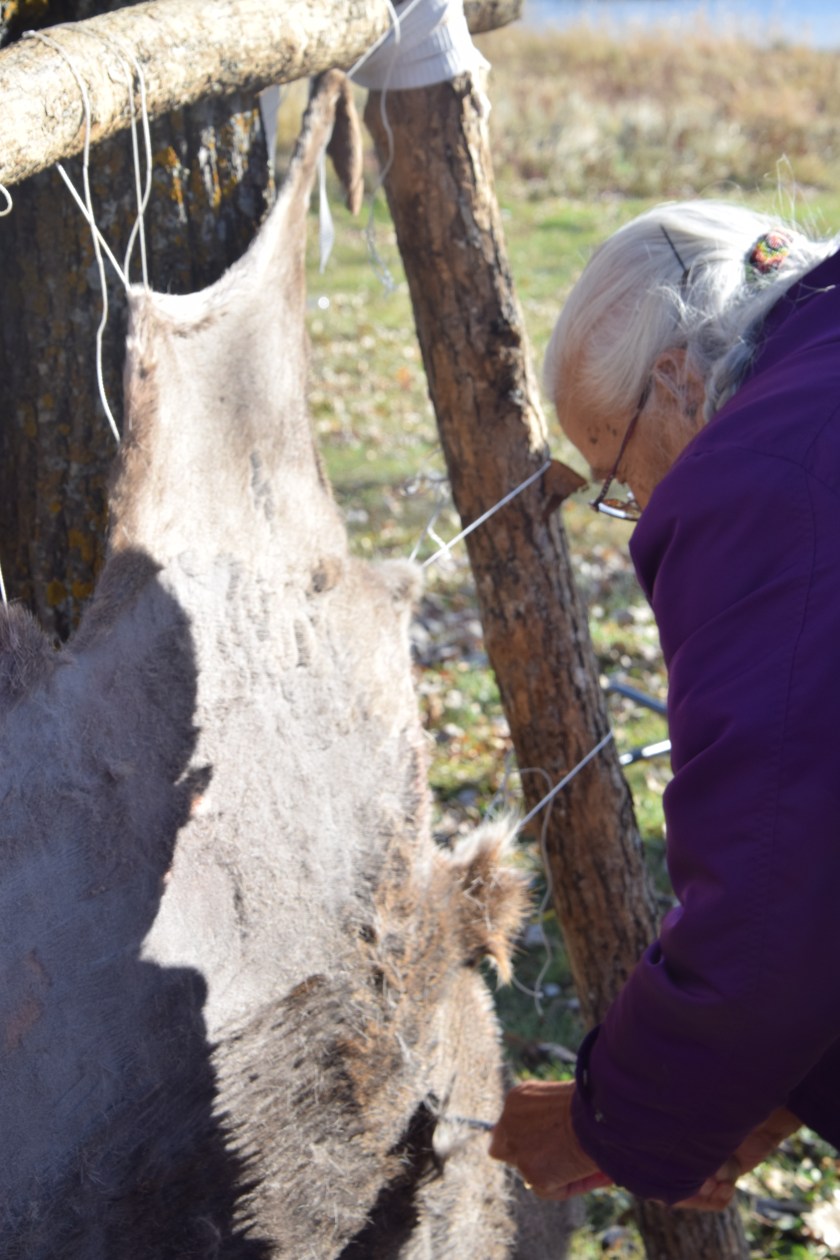
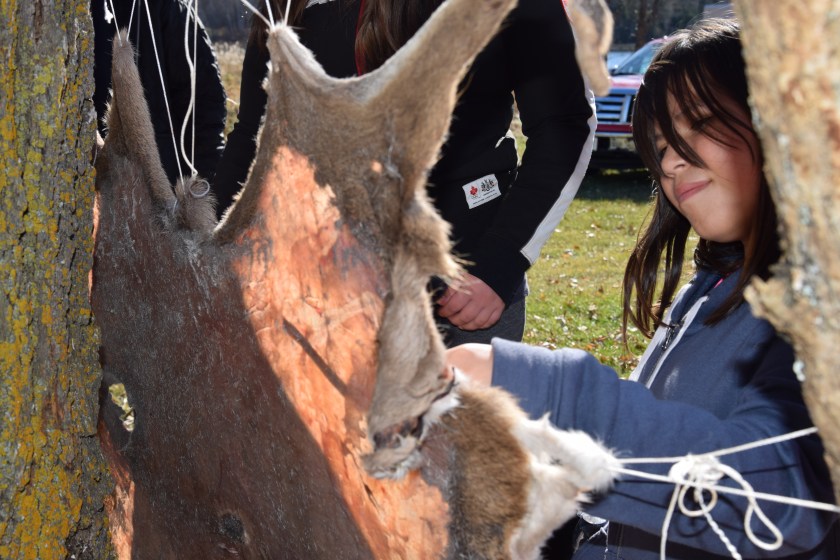
Elder Evelyn Tom scraping deer hide (Photo Credit: Virginia Loon)

The cultural camp involved people from in and out of the community, including students from Kenora’s Beaver Brae Secondary School.

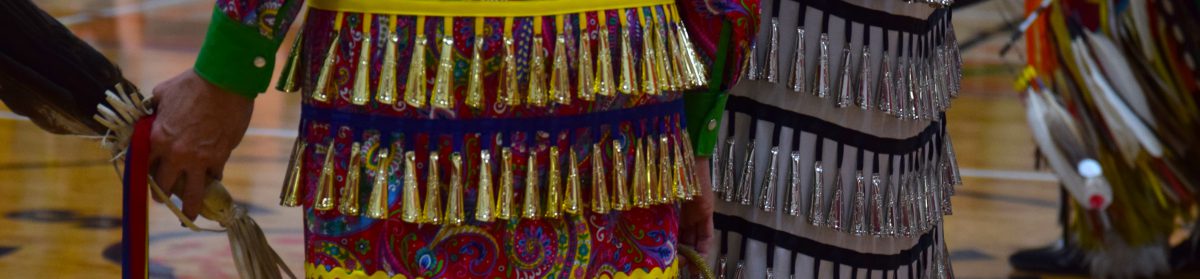
Other cultural workshop activities included community art, tikinagan baby carrier making, deer harvesting and hide scraping, ribbon skirt making and soapstone carving. Daily feasts followed.  A traditional powwow closed the event.

BraydenNash5
Young participants take part in soapstone carving (Photo Credit: Brayden Nash)

Carmen Bird, or Giizhibabenacesiik of the Sturgeon Clan, is Director of Services for Shawendaasowin Child and Family Services. “We don’t usually see cultural activity event opportunities in our community, so this is one of the things we were able to bring forward because of funding that we have received,” she said.

OceanTom9
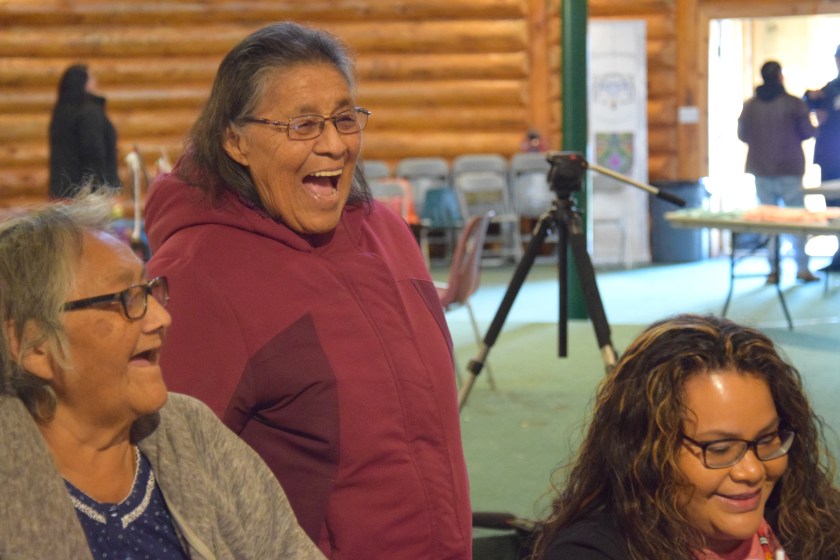
The smiles of generations with Carmen Bird (right) (Photo Credit: Ocean Sky Tom)

The idea for this cultural camp came from the Jordan’s Principle Initiative. Jordan River Anderson was a young Cree boy from Norway House, Manitoba who didn’t get the service that he required and he had to be away from home to receive medical care.  He had to stay in a hospital, and while there, he passed away while the provincial and federal governments argued over who should take responsibility for his costs and didn’t speed up any process for him to be at home where he should have been.

Scraping deer hide (Photo Credit: Jazlyn Copenance)

Funding from Jordan’s Principle is to provide students, youth and children access to required services at home. The cultural camp fell into this category.

Bird believes it is important to retain cultural teachings and traditions from elders within the community.  “We can come together once in a while with educators, our skilled people, the ones who have talents, our organizations and our elders.”

She said Shawendaasowin plans to host future cultural camps.

Roland White
Cultural Camp Pow Wow (Photo Credit: Roland White)

More Than Just a Skating Rink: Altruistic Peers Strive for Change

DamonHunter2
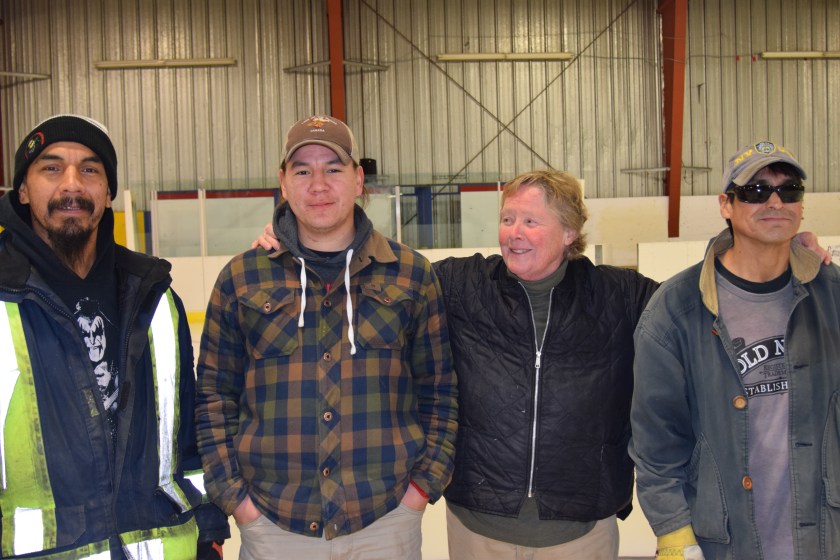
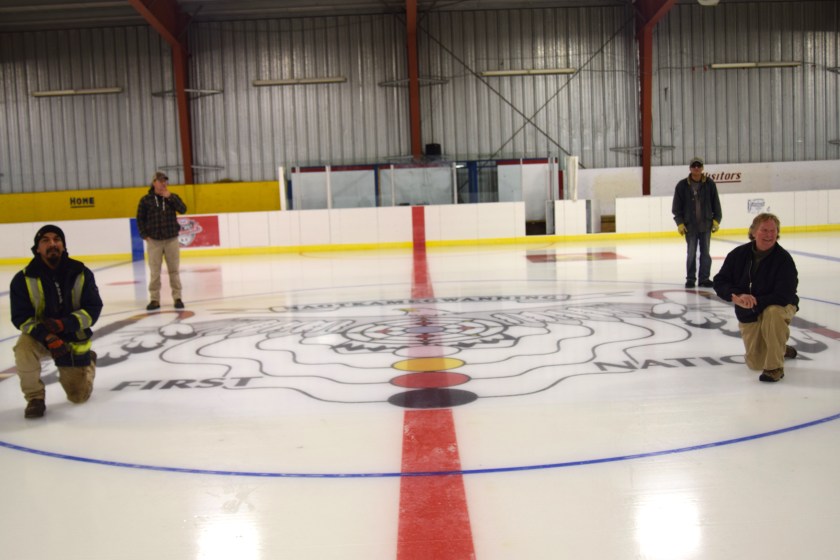
(Left to right) Everett Cowley, Clement Gustafson, Mary-Anne Mooring, Glen White (Photo Credit: Damon Hunter)

Fellow workers make efforts towards a better future for youth

By: Damon Hunter

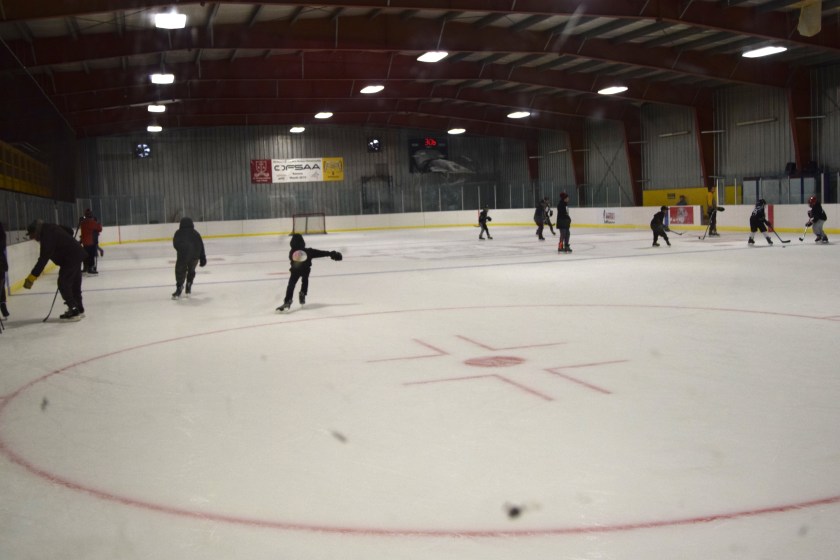
Thursday,  November 15th was the official opening of the 2018-2019 season of skating at Naotkamegwanning’s Chi Key Wis Arena. It brought smiles, not just to skaters, but also to the people that made it possible.

Damon Hunter 6
Local skaters participate in an open-skate held at the arena (Photo Credit: Damon Hunter)

Since the major reconstruction of the Chi Key Wis Arena four years ago, Mary-Anne Mooring has been the woman behind the scenes helping to make it happen.

Mooring is a longtime Power Engineer, with three decades of experience, including Chief Engineer at the old Winnipeg Arena which housed the Jets and Winnipeg Moose, and Assistant Chief Engineer at the University of Manitoba. She was also responsible for overhauling Kenora Recreational Centre and making their ice.

Mechanical work was what she specialized in for the most part. “I took care of all the physical plans,” she stated.

She expressed gratitude for her fellow workers Glen White, Everett Cowley, and CJ Gustafson. Without the band and council’s financial and motivational support, no such progress would be made, she explained.

Mooring says she is grateful for her partner Denise Lysak who writes some of the grants for Naotkamegwanning projects alongside her.

Everett Cowley is one of the first arena workers, employed there since day one, ‘from where it was just a few light bulbs working and natural ice’.

Prior to his current position, he had already been working at the arena before major changes took place, including removal of mold. His current job, maintaining the Zamboni and ice, is a critical one. Cowley commented that so far there haven’t been many problems and with everyone’s work contributions, things have been running very smoothly.

He related that his main motivation is the kids. He remarked that his grandson is an influence as well, stating that he provides a major incentive to do what Cowley does day by day.

(Left to right) Everett Cowley, Clement Gustafson, Mary-Anne Mooring, Glen White (Left to right) Everett Cowley, Clement Gustafson, Mary-Anne Mooring, Glen White

DamonHunter4
(Photo Credit: Damon Hunter)

Together as a group, the workers have been largely responsible for most of the grander changes around Whitefish Bay. Locations such as the new beach, the baseball diamond, and the basketball court are some of the their accomplishments and there will soon be a new skate park along with a conjoined bicycle track.

The goal, Mooring says, is to give the youth a chance at finding what they enjoy and to have something fun to do in their free time.

“We’re about making things better, not just taking care of ourselves,” she says. “It’s about the community.”

Many more projects are aspired for, the biggest being a whole new training facility for young athletes. Wrestling, hockey, and lacrosse are the prime targets as of now. Beach volleyball and a new fitness centre are also very much wanted.

“I know there’ve been some great athletes that could’ve come out of Whitefish Bay and they never had the courage to be able to do what they should’ve done,” Mooring said. “To become those athletes, they need a network for support.”

The following article was also published in the Kenora Daily Miner – The Enterprise in print and online. Available here

A Safe Space to Grow

By Katherine Adams

Freeman White Jr has taken the opportunity to visit his home town of Whitefish Bay, this time working with Right to Play under Kenora Chiefs Advisory.

“I wish that I had this when I was a kid,” he said in an interview with Virginia Loon.

Right to Play was founded in 2000 by Olympic gold medalist Johann Olav Koss and has since grown worldwide. Right to Play serves 85 First Nation communities in Canada.

He said his goal is to provide a safe space to play and learn including sports, cooking classes and a place to do homework.

46503296_306181453322079_4329471087571107840_n
Freeman White Jr. participates in many sports activities, including baseball (Photo Credit: John White)

“I have hopes that Right to Play can inspire youth to achieve their wildest dreams, either through the programs or just by talking with the kids that are involved,” he said.

Currently he comes to the school to Tuesdays and Wednesdays from 3:30 to 5:30 pm. Starting in mid-January, he will be here on Saturdays to coordinate volleyball games with nearby reserves under the program.

He said he would like to deliver this program to ages 6-12, which is what the “After School Program” is designed for, but persons of all ages are welcome.

“I am aware that there are other programs that are being delivered to youth on a daily basis.  I would hope to collaborate with them and not compete,” he said.

He is here with the program for ten months from November 5th to August 31st.

The Responsibility of all to Our Environment

DSC_0189
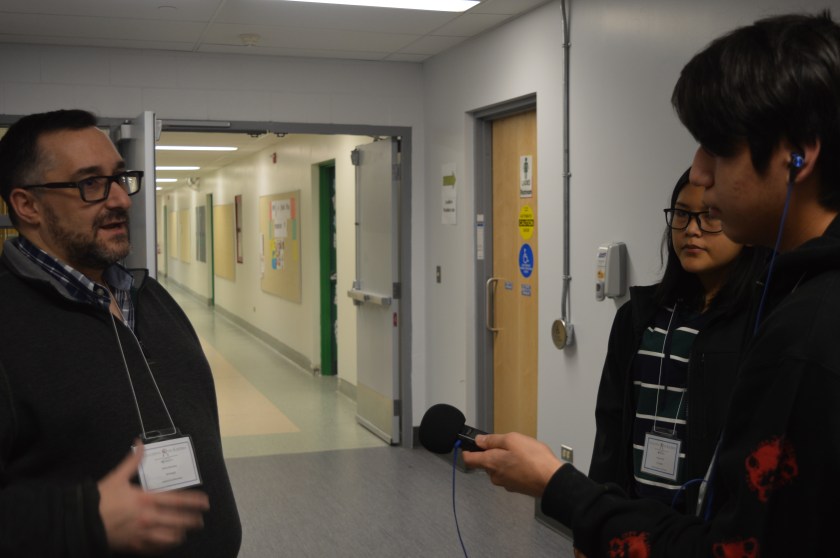
Xavier interviewing professor John Iacozza (Photo credit: Brooke Swoffer)

By: Xavier Ranville

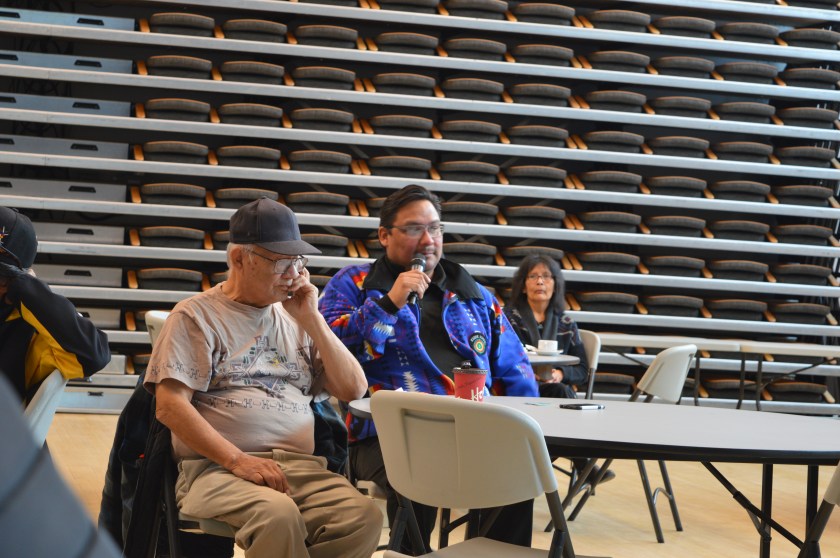
Recently, I went to a two-day Youth Summit on Climate Change in Kenora with a few other high school students and teachers from across Treaty 3. It was interesting to learn about how climate change will affect the future. Speakers explained in what ways we will notice more climate change as time goes on.

I can already see what it’s doing to the planet and everything that lives on it. When I was a kid, there was a lot of snow, and we could build snowmen and go sliding, but now, sometimes the snow isn’t deep enough to slide and it isn’t that much fun and it’s also dangerous.

I’ve learned from the conference that we can prevent further damage from happening to our planet. This includes being aware of one’s own responsibility to stop putting pollutants into the atmosphere with their unhealthy daily routines.

DSC_0044
Allan and Ryan White of Naotkamegwanning First Nation (Photo Credit: Xavier Ranville)

An example where climate change is being affected the most is in the Canadian Arctic. This was explained by one of the speakers, Dr. John Iacozza, a professor at the University of Manitoba, who has spent over two decades of living and researching in the Arctic.

Iacozza explained in an interview that it is in our lifetime that the effects of warming, on animals and people, will be irreversible.

He said that more recently, people are speaking about the lack of action on climate change and that more of his research and expertise is being called upon internationally.  

“More and more, it is understood especially in the Canadian government, climate change is happening and is a major problem in the north as well as the south,” he said. “There are steps being taken, especially with the engagement of the Inuit and the other communities in the north, to deal with climate change.

“To work with economic development in a more sustainable way, we can have both, we just have to do it in a better way that we have in the past,” he said.

Iacozza provided steps youth (and adults) can take in helping to reduce the impact of climate change in the north:

1) Appreciate that climate change is happening and understand that it’s happening and it’s not something that people have made up or things like that.

2) To understand that what we do down in the south effects what happens in the north.

3)  Start working with other communities in the north to better understand the impacts of climate change, and that economic development needs to happen in a sustainable way

On the second day, during our lunch break, the organizers handed us a set of questions to answer and hand in for marking. Near the end of the conference, they added up the marks to who answered the most questions correctly.

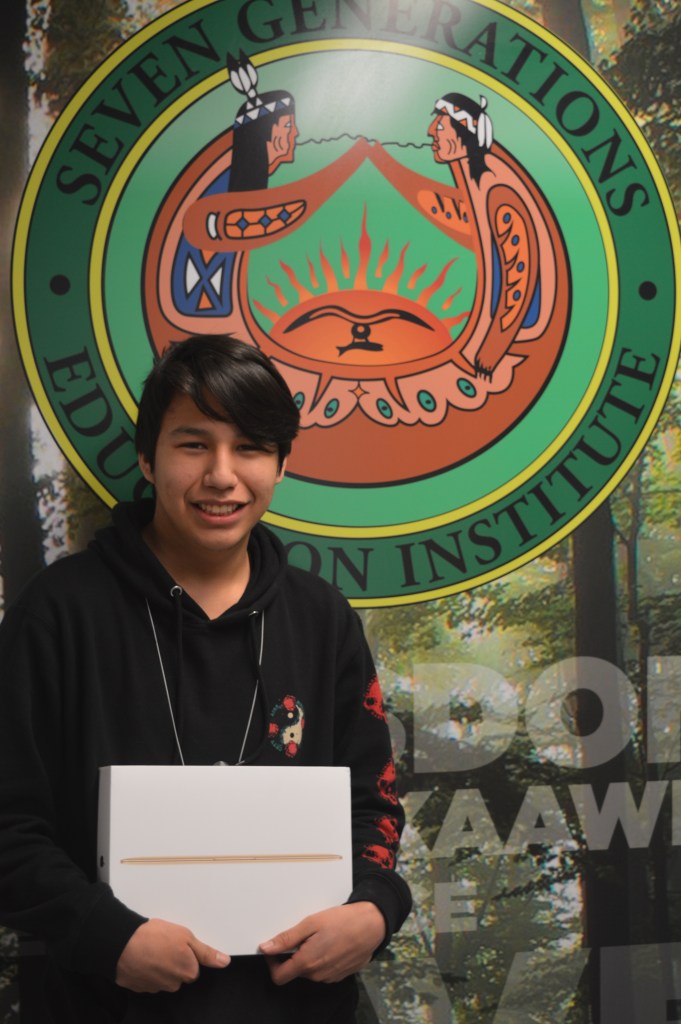
When they said that the winner was from our school, I wondered who it could be. Then they said my name! I walked up to the front table to receive a MacBook, then later took pictures with it and was congratulated.DSC_0266

The conference was hosted by Grand Council Treaty #3 and was held at Seven Generations Education Institute. Baibombeh Anishinaabe School student attendees were Isaac Kavenaugh, Ireland Bird, Danton Monias, Drayston White, Dorian Fair, Corban Crow, Carmen Loon, Mackenzie Blackhawk, Lucey Oshie and Xavier Ranville.

Becoming a Peer Helper

Kenora Chiefs Advisory - Nov 17 - Peer Helpers
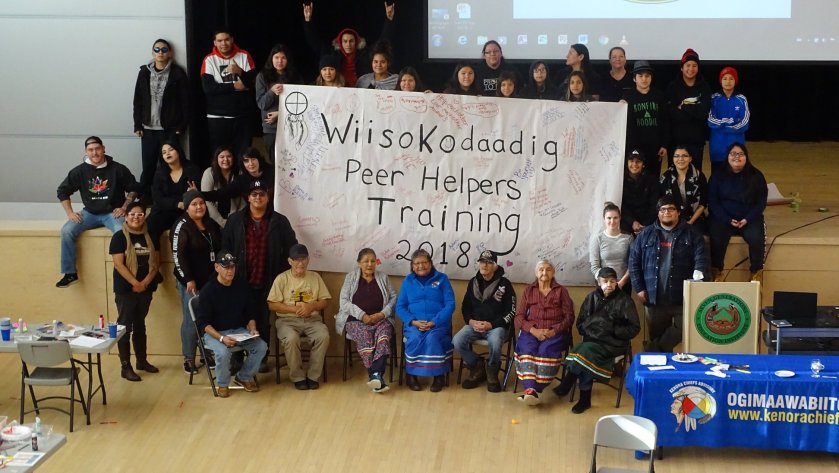
A sign displaying the event’s title is help up for display alongside organizers and participants (Photo credit: Kenora Chiefs Advisory)

By: Corban Crow

At the peer helpers program in Kenora, Oct 14 to 16, the Kenora’s Chief Advisory, brought youth from different communities to train and become peer helpers. I went with my friends Jordanson, West, Carter, and our driver/chaperone Daniel (Hoss) White. Health services chose us to go because we are team players and have a lot of friends. We had to ask what a peer helper was and when we found out we were all too excited to attend.
On the first day, we sat and listened to the opening prayers and ceremony. The positive energy at Seven Generations was a feeling to remember. The smell of smudge flooded the building and our senses.
Throughout the first day, facilitators embedded positive thoughts in our young minds. Allan White, a member of Naotkamegwanning, taught us about our clans. I remember him giving all of the youth the microphone and telling us to say our clan and where we’re from and him telling us stories about each of our clans. I was eager to learn about about my clan. My great grandfather, Albert Crow, is a member of the Moose Clan. My grandfather and father are also Moose Clan. I learned that we follow our father’s clan.
Another important teaching was given by Kate-Lynn Paypompee, also a member of Naotkamegwanning. My favorite part of her presentation was when she gathered volunteers to help her show us what she was talking about. She had five of us come up and grab strings. They were all attached to each other and each one represented something. The first one represented me, the second one represented family, the third one represented friends, the fourth one represented community, and the last one represented the work we do. Then she balanced an egg between all the strings.
After she talked about our job and what happens when you lose it, the person representing your job let go. Then she talked about community and what happens when you lose that, then the person holding the string representing community let go, and so on, until there were two left holding the string with the egg in the middle. The person representing family let go and the egg fell.
Afterward, we had a presentation with elders and adults about helping the communities. The most interesting thing about the first day was listening to the elders speak and learning about the feather teaching. The feather teaching was very interesting to me because the presenter had drawn an eagle feather and showed us her eagle feather. There was a rough part at the bottom and that part meant the learning stage.
The learning stage was learning how to walk, how to speak, and how to eat. In the middle of the feather, there were these sides where it was uncombed. That represented the mistakes you made and where it goes like if you broke into a house or hurt someone on purpose. Then the top of the feather represents where you are more mature and have a better understanding of life.
We had a mental health workshop for an hour. The workshop talked about diabetes and suicide. The diabetes worker explained that youth should be sleeping for 8 hours and adults for 9 hours. There was a suicide speaker, and she spoke about what causes suicide and how we can help stop it.
The icebreaker activities we had two times a day were my favorite part in the program because they were games to enjoy and all the youth had to participate. Some games were embarrassing, but the more we played them, we didn’t care if it was embarrassing. The program taught me a lot of valuable life lessons by listing to our elders and adults.

Peter White Goes To Hudson’s Bay Store

By: Allan Crow

Our mama, Kathleen Crow, use to tell us the story of how her father, our grandfather Peter White, went to the Hudson’s Bay store when he was a young man. I can relate to the story of  my grandfather. Possibly many youth today can also relate as they leave home to attend universities for a better life.

He was still single at the time,  just before the 1900s. The store from where we are today known as Whitefish Bay was located far into the north in Hudson Bay, Saskatchewan, nearly 1,000 kilometers away.  In that time, there were no roads anywhere in the land. The railways had appeared at that time, but nowhere near our area.

My mother had many sisters and brothers; she remembered well the story their father told them.  It was in the summer their father told them that he told his parents he was going to that store way up in the north.  He knew his parents were worried but they did not say anything; they told him to be careful. The store was so far away and it would take a long time to reach it.

He had left alone that summer from the small community, taking only his small rifle and a knife to hunt for food as he went.  Peter said he was lucky he met another young man on the way, and that he too was heading to up north to go see that store they had heard so much about.  They knew it was a company that bought beaver pelts from the natives, and other wild animal furs. Peter and the other youth agreed they would split whatever money they made from the trip.

They collected many pelts along the way.  Although it was cold when the winter came and the terrain was harsh, the young men did not encounter any hardships for they were young, strong men.  They were adept in making shelters, and setting up camp a few days at a time, hunting beavers to sell. The young men took time to prepare the pelts; drying the skins and making pemmican from the meat.  The tools they made along the way were snowshoes, sleds, and bows and arrows.

Still winter, the young men bought horses to carry the food and tools they bought from the Hudson’s Bay Store.  My grandfather, Peter White, returned back home in the summer. He had been away all winter. His parents and the community members were so happy to see him coming home.  He had brought lots of food for the people, salt, pepper, sugar, flour, tea, and coffee. He had also brought hunting tools for the men.

His parents cooked and had a feast that evening with the whole community.  Everyone was so happy.


Travel Club Holds the Community’s First Zombie Race

DSC_0147
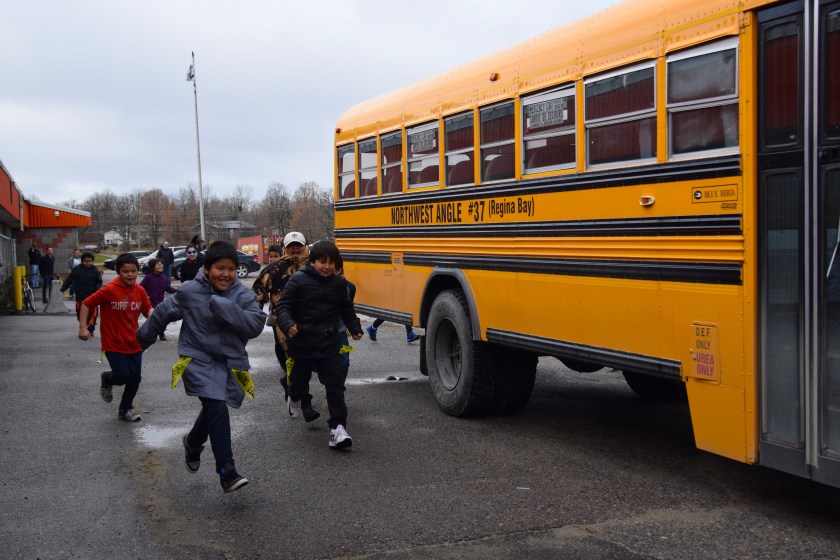
Students run in preparation for the upcoming chase (Photo Credit: Karli Zschogner)

By: Drayston White

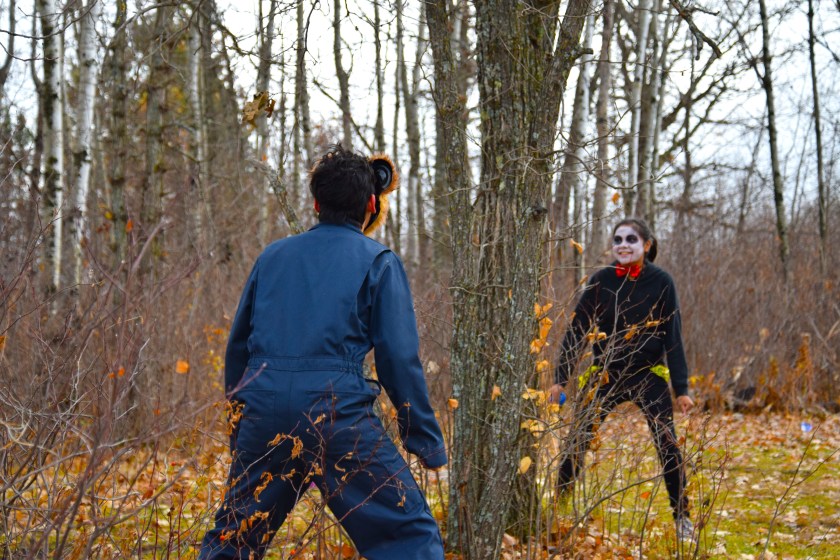
On Halloween, the newly created BaiBomBeh High School Travel Club hosted an event called the Zombie Run. In this event, the high school students dressed with face paint to look like a community of  zombies – a zombie apocalypse.

The elementary students who participated were prepared, scared and eager to run away from zombies outside who could steal their lives away, and the ribbons they had on their clothing.

DSC_0155
Virginia Loon in a close call with Zombie, Connor Kakeeway (Photo Credit: Karli Zschogner)

The point of this event, a great idea of high school teacher Jordan Marchand’s, was to raise money for the club. All community members were welcome. Prizes included a Samsung tablet. The club was also able to raise some funds through a canteen and bake sale.

Zombie Race - Hayzn Tom (Photo Credit: Karli Zschogner)
Zombie Race – Hayzn Tom (Photo Credit: Karli Zschogner)

As a travel club member, I though the event was a lot of fun!

The travel club is hoping to raise enough money to travel somewhere interesting and fun. Some of the places that we have discussed are New York, Orlando or Vancouver. The current plan is to travel in May, 2019. We will continue to host fun events and fundraisers in the upcoming months, including through the sale of our community newspaper, Naotkamegwanning Mazina’igan.

We hope to see the community participate and support our enriching cause.

New Group Provides a Safe Space for Women to Build Their Confidence in Speaking

Naotkamegwanning Arena housed some much needed giggles and encouraging applause.

Toastmasters-Karli Zschogner
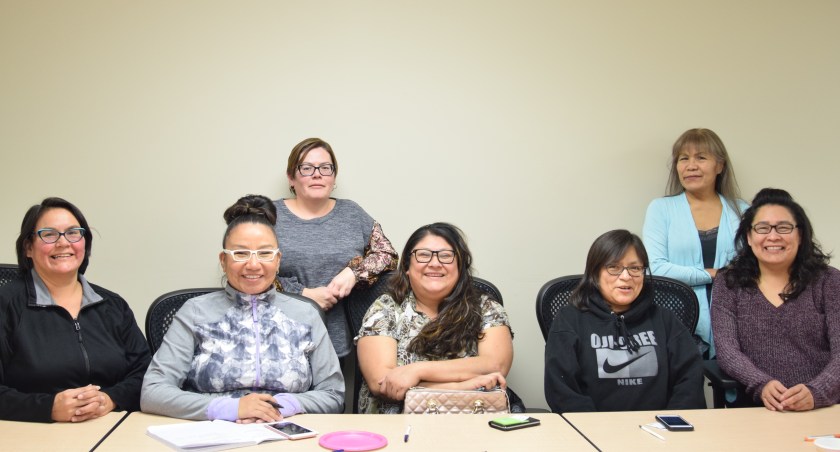
Front: Darlene Oshie, Rolanda Wilson, Marilyn Leask, Rose Mary Paypompee, Darlene Paypompee Back: Laura Kakeeway, Patricia Biggeorge (Photo credit: Karli Zschogner)

By: Patricia Biggeorge

Ikwewag Toastmasters Club began in the community of Naotkamegwanning in October 2018 at the request of a couple of ladies in the community. Darlene Paypompee was approached because she has been a toastmaster member for a few years.

“I saw a need in the community, and every other community, to learn how to speak in public, conduct meetings, to gain confidence to speak up, to work or join in various committees, and I wanted to support them,” she said, “So, I decided to organize Ikwewag Toastmasters Club where women (Ikwewag) could learn these skills in a social and safe environment.”

Toastmasters is an international network in communication and leadership development.  Some people may wonder why it is called ‘Toastmasters’. Founders of the YMCA realized that a space for encouraging better communication was needed. The name resembled a banquet with toasts and after-dinner speakers.

A Facebook page titled ‘Ikwewag Toastmasters Club’ was launched in early October. Local Indigenous women, 18 years and above, are invited –  not just in Naotkamegwanning, but anyone from neighboring communities.

The first two practices happened in the last two weeks with a minute to speak on a table topic chosen randomly. The ladies chose the topic based on a theme for the meeting. The seven women discussed with each other on how even speaking improv for one minute was exhilarating and they already felt safer and confident.

Darlene said there will be a poll on the Facebook page so that members will have an idea on what to say. The long term goal is to build enough skill and confidence to be able to speak without filler words such as umms and ahhs for 5 minutes. The clubs’ support builds research skills and the ability to speak on a certain topic with confidence.

Joining the club inspires the development of ten goals within a person on public speaking. These are evaluating one’s own speaking ability, preparing and giving speeches, giving impromptu talks, controlling voice, vocabulary and gestures, giving constructive feedback, building confidence, sharpening leadership abilities, improving improvisation, expanding networks, and sharpening speaking, listening, understanding and thinking skills.

It is up to the individual as to when these goals are achieved. The individual can compete in speaking competitions at the regional, national or international level. Membership in the Toastmasters Club provides this small Indigenous community an opening to the rest of the world.

If interested, women can join the Ikwewag Toastmasters Club Facebook page, and are encouraged to sit in on the bi-weekly meetings  starting at 6:00 pm. While the club is for 18 years of age and over, there is the opportunity to start a club for those under 18 years of age, or come to the next meetings.

Membership allows access to regular tips, magazines and competition. Registrations are being accepted, but until a membership of 20 is reached, the club cannot register to confirm its unique bilingual status with Anishinaabemowin.

Chopping Wood for Elders Video Making

By: Hayzn Tom

I had so much fun making this video from start to finish to finish.

It was on October 11 our first snow day of the season from my Grade 6 class at Baibombeh Anishinaabe School.

I went to the Chi Key Wis Arena and found the journalism trainer Karli Zschogner. There were volunteers outside chopping wood for houses.

I hope you enjoy the video.


Design a site like this with WordPress.com
Get started