An unexpected space of truth and reconciliation at Naotkamegwanning roundhouse

In recognition of Orange Shirt Day, Hockey Hall of Famer speaks at Indian Horse screening

By: Xavier Ranville and Wynter Taylor

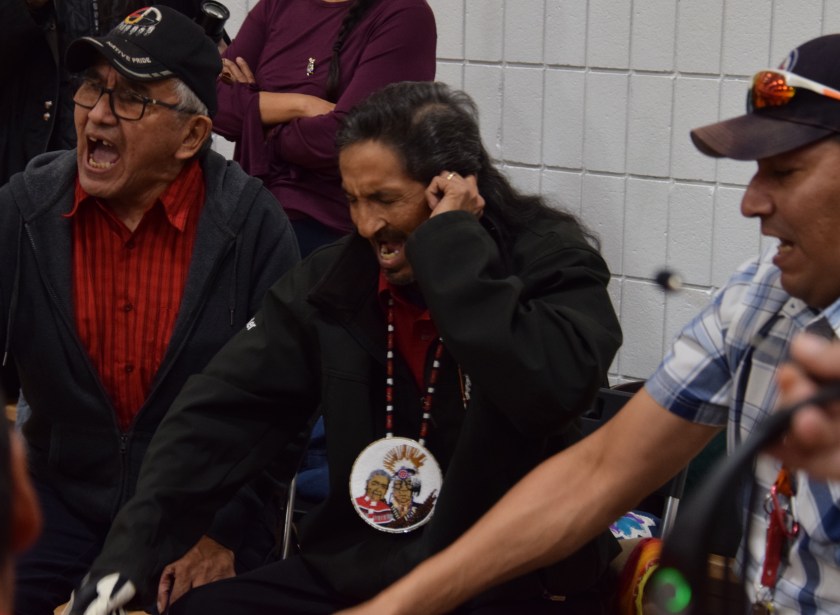
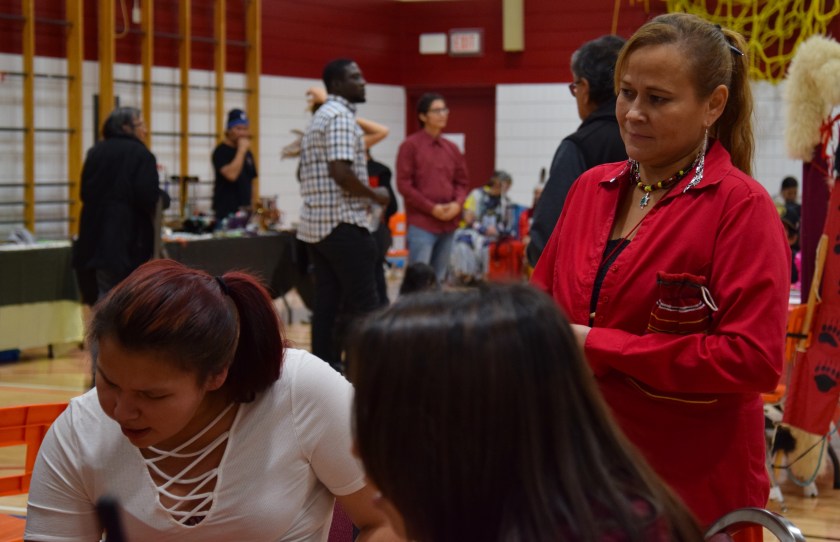
It was a chilly last evening of September when Naotkamegwanning’s roundhouse was filled with more bodies than it has had in a long time – dedicated to residential school survivors.

The 40 plus community members and guests of all ages enjoyed traditional foods as wild rice and bannock before sitting down for the big screen and local George Kakeway’s similar story of residential school survival through hockey.

“Be who you are because that’s how you survive,” said Kakeway in discussion after the award-winning film adaption of the novel by the late Northwestern Ontario’s Anishinaabe Richard Wagamese.

Indian Horse, follows the fictional Anishinaabe character Saul, and his experience at residential school and his talent through hockey. The story captures many of the realities of racism and ill treatment Indigenous persons have faced.

Sept30IndianHorseGeorgeKakewayRoundHouse_Xavier_recording-WynterTaylor
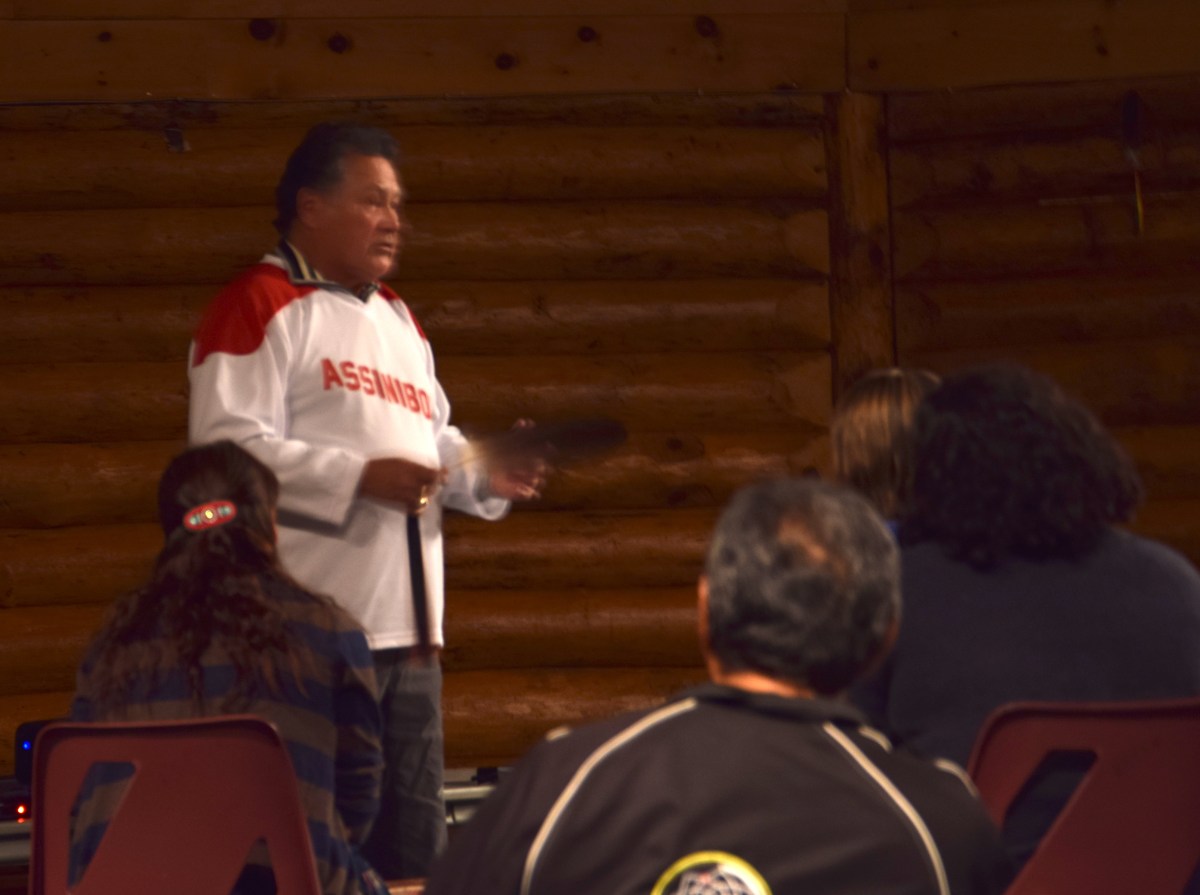
Kakeway as the only Indigenous boy played hockey in Kenora, later attending Assiniboia Residential School with later Assembly of First Nations National Chief Phil Fontaine (Photo Credit: Wynter Taylor)

The film left many people in tears touched by the story, either seeing for the first time on screen the real experiences of their loved ones or because they had no idea of this part of Canada’s history and what they went through.

Like many adults and elders like Wauzhushk Onigum First Nation’s George Kakeway, the story of Saul and his peers was very much a reality.

“As a survivor it becomes very hard to express what we went through,” he said in the community discussion.

George was taken from his home in 1951 at the age of 6.  He talked about his time at St. Mary’s Catholic Residential School in Kenora, that his hair was cut bald and punished for speaking Ojibwe. He expressed that this place, along with its sanitarium, was one of the loneliest places.

“The intent was to assimilate us, not to educate us,” he said.

Like character Saul, he was an orphan at age 10, and hockey had come available for him and he excelled, not just out of interest but a method of survival from experiences.
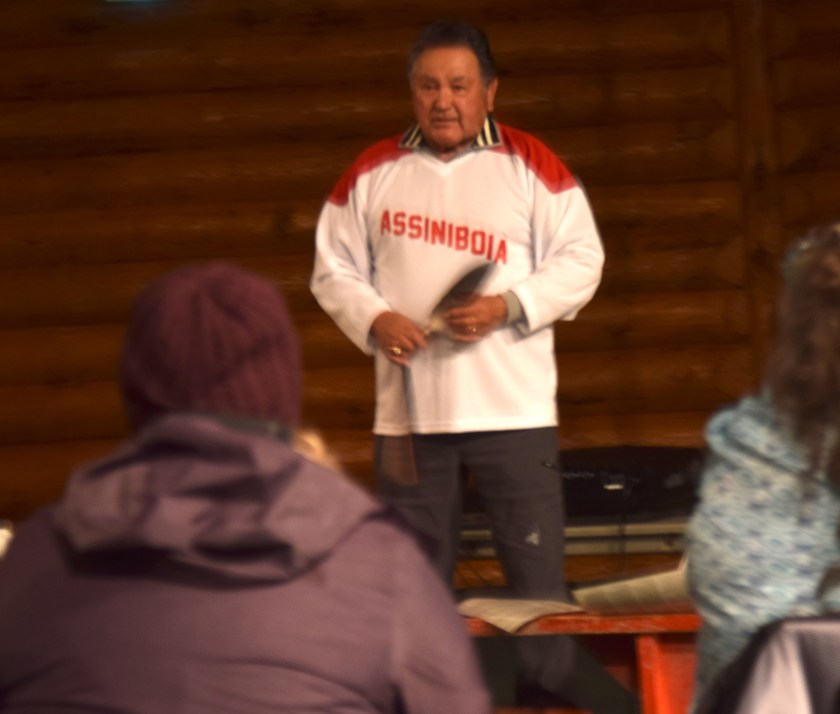
Wynter Taylor - George Kakeway
George Kakeway said he would use hockey and other sports to get it out of your mind and survival. (Photo Credit: Wynter Taylor)

He said hockey gave him the opportunity to chose to go to Winnipeg’s Assiniboia Residential school which let him study and also gave him time to play hockey. His focus led him to become the chief at his home at the young age of 25.

In October of last year George and his team were inducted into Manitoba’s Hockey Hall of Fame.

September 30, Orange Shirt Day is not just the last day of the month but a national movement, and proposed national holiday of sharing residential school experiences. It remains a hard day for many elders to relive and share, taking courage.
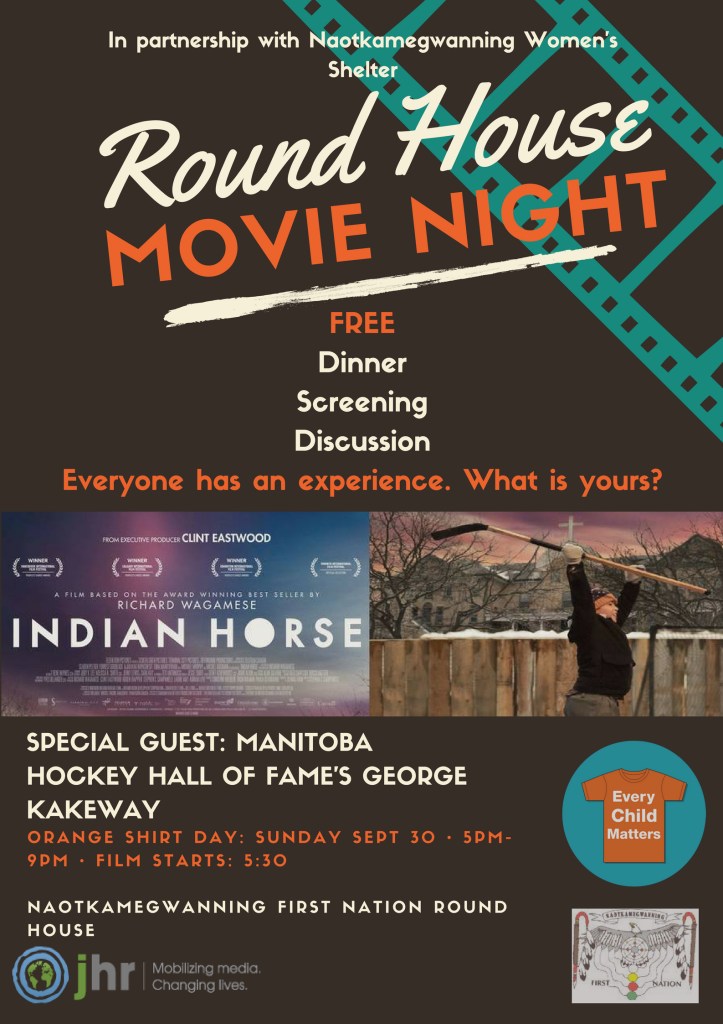
Kakeway Indian Horse Screening Poster
Indian Horse Screening Poster (Photo Credit: Karli Zschogner)

While having heard about residential schools, Judi Cannon, a non-indigenous attendee, was overwhelmed to learn about what was going on inside and outside of the residential schools.

“I can’t even believe it would happen,” she said.  “I don’t understand how people could treat other people that way.”

Cannon, Director of Ontario SPCA for Partnerships and Community Outreach, along with her crew were invited into the community for their second year extraction of unaccounted for dogs.

Event was put on by the community’s journalism trainer and the community’s Women’s Shelter.
Naotkamegwanning Mazina’igan – October 19, 2018 – Issue 1

Naotkamegwanning First Nation’s (formally Whitefish Bay) first newspaper
1. Cover Photo Feature Credit: Roland White
2. Letter from Co-editor – Karli Zschogner
3.the first times harvesting a deer – Ocean Sky Tom
5. An unexpected space of truth and reconciliation at Naotkamegwanning roundhouse – Xavier Ranville & Wynter Taylor
8. Naotkamegwanning’s Hanisha Singers take a national stage in supporting families of missing and murdered – Roland White
11. More than just beauty – Okima Paypompee & Ozaawaa Paypompee
14. Noatkamegwanning fishing derby dedicated to passing of local resident – Damon Hunter
16. Baibombeh Anishinaabe School messages
18. Baibombeh Anishinaabe School – What is Nominal Roll? – Ian Crow
19. Everything You Need to Know: Cultural Camp – Kelly Kavanaugh
20. Baibombeh Anishinaabe School – Grade 1
21. Baibombeh Anishinaabe School – Grade 2 & 3
22. We Can Do Better – Virginia Loon
23. Why are Baibombeh students not getting work done? – Xavier Ranville
24. Anishinaabemowin Workshop -Roland White
25. Elders-in-Residence: Betty Tom – Ozaawaa Paypompee

Noatkamewanning Hanisha Singers take a national stage in supporting families of missing and murdered

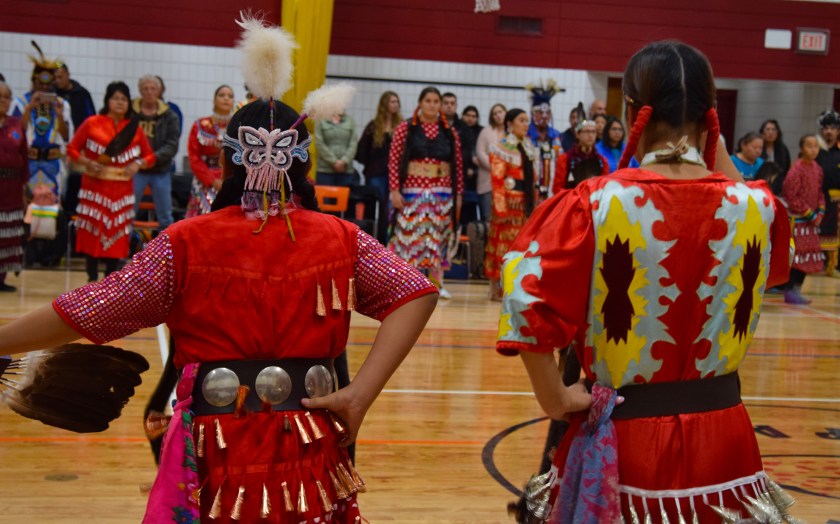
People of all ages shared a space of healing through a red jingle dress pow wow held in Winnipeg followed the five-day MMIW Inquiry.

By: Roland White

Families could feel the powerful shivers down their spine as Teddy Copenace solo lamenting song to missing and murdered indigenous women. The Red Jingle Dress pow wow, dedicated to the tragic missing and murdered women and men, was held at Winnipeg’s Lavallee School October 6.

“In’de dabajiitoon gi-nagamowan. (I sing from the heart.) Niminwendan apane gi-nagamowan owe nagamon (I feel good every time I sing this song.)”, says Copenace.

Teddy and Leslie Copenance an Tommy Hunter
Teddy Copenace, Leslie Copenace and Tommy Hunter (Photo Credit: Roland White)

Copenace says him and the rest of the Hanisha Singers volunteered to come to this event to help honour and support families in the healing process.

He describes the particular song, “Missing and Murdered Indigenous Women” on the groups titled album ‘Remembering & Honouring Our Lost and Stolen Sisters’ before he sings. Woke up crying, he says it came to him as a dream of a girl who was in distress and trying to reach out to him but he was unable to help her.

Jingle Dress Dancers
Red Jingle Dress Dancers (Photo Credit: Karli Zschogner)

He explains his wife told him to go outside a make a fire and put tobacco down. While outside, the wind blew and he heard a voice say, “ogimaa- ikwe.” Afterwards he put down tobacco, he heard the leaves rustling like jingles and a voice saying again, “ Okijiichidaa-ikwe  was the one you were dreaming of.”

Desirae Paypompee was one of the red jingle dress dancers that came to participate in the pow-wow. Currently living in Winnipeg, she is originally from Naotkamegwannng First Nation.

Desirae Paypompee
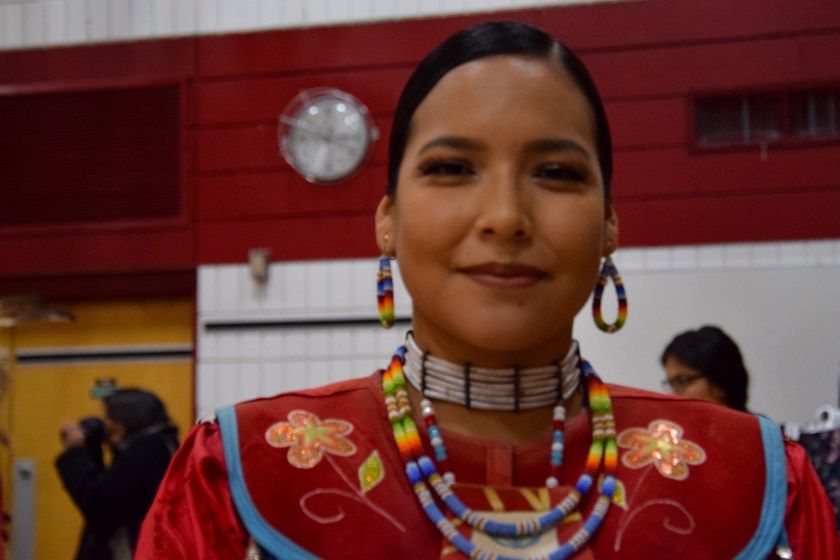
Desirae Paypompee, originally from Naotkamegwanning First Nation, joined as a jingle dress dancer and the Winnipeg pow wow. (Photo Credit: Karli Zschogner)

She says it was a pleasant surprise to see her community members partake in the event.

“It was very healing,” she says. “It made me feel apart of something big.”

She says she feels responsible for educating her son about respect. She says she believes that like the Orange Shirt Day movement, youth and adults should be educated about this horror.

“I do have relatives who have lost their loved ones and I also have friends within the city who have lost loved ones also,” she says.

Jingles Dress Dancers - Roland White
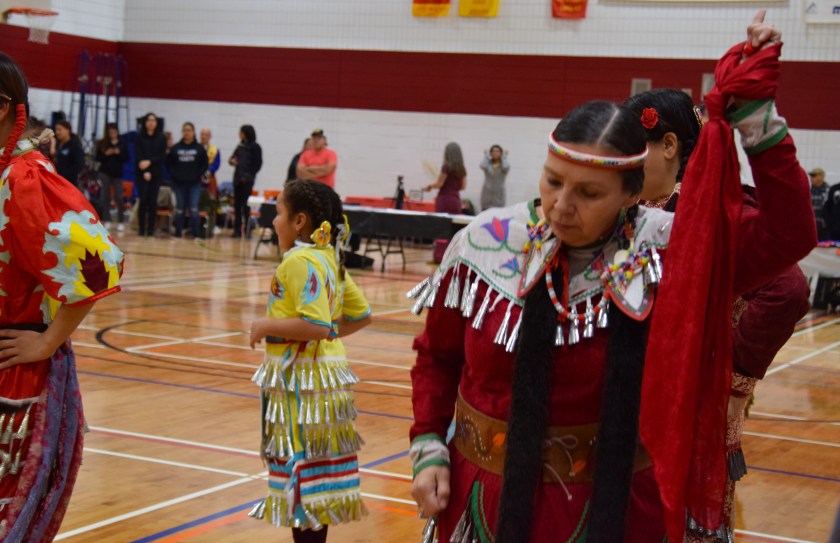
Jingle Dress Dancers dance to help heal the pain (Photo Credit: Roland White)

The organizers including Walking Little Bear Candace Arrow expressed gratitude to the Hanisha Singers for dedicating their time and energy in attending the MMIW pow-wow.

She says she started planning this event in February for a space for healing and unity for the affected families. She says the process ended up something much more.

“It kept me clean, it kept me driven and kept me focused” says Arrow.

Organizer Candace Arrow watching female drum group
Organizer Walking Little Bear Candace Arrow watches female drum group (Photo Credit: Roland White)

She says has experienced both sides, being a supporter for children and youth at Red River College, and as a victim and survivor.

“I was nearly taken. I was 14. I was lured by alcohol and the man took me to the river,” she says. “Who knows what he could of done with me. I jumped out of the moving car.”

She was getting very emotional and teary eyed.

She says out of principle, she kept her budget costs below the small missing persons rewards offered for finding missing indigenous girls.

She says she was overwhelmed by the large turn out, raffle and food contributions and considers having it next year.

“If I do have it next year, it’s going to be in every province,” she laughs.

https://www.facebook.com/plugins/video.php?href=https%3A%2F%2Fwww.facebook.com%2Fwhiterol%2Fvideos%2F2112036925507566%2F&show_text=0&width=560

We can do better

Virginia Loon
“It’s annoying when bullying happens because people will feel hurt when everybody notices what that person said about another person.” (Photo Credit: Virginia Loon)

By: Virginia Loon

Sometimes the reserve is boring, sometimes it’s not.

It can get ugly when everybody fights, but everyone will get along later on.

It’s annoying when bullying happens because people will feel hurt when everybody notices what that person said about another person. It’s just sad.

Everyday I ask myself, “Why is this happening?” But nobody will reply because nobody wants to admit what I am talking about.

It’s annoying and sad at the same time that people don’t own up to their own actions.

I honestly don’t know how I feel about this reserve. It scares me sometimes.

There are people who are mean to me a little bit but you know I ain’t supposed to say anything back. But I do because it needs to be called out.

Sometimes I wish some words would never have come out my mouth but they do.

I wish there was never such a thing as bullying so we could help the community be better.

Naotkamegwanning youth learn respect to wildlife

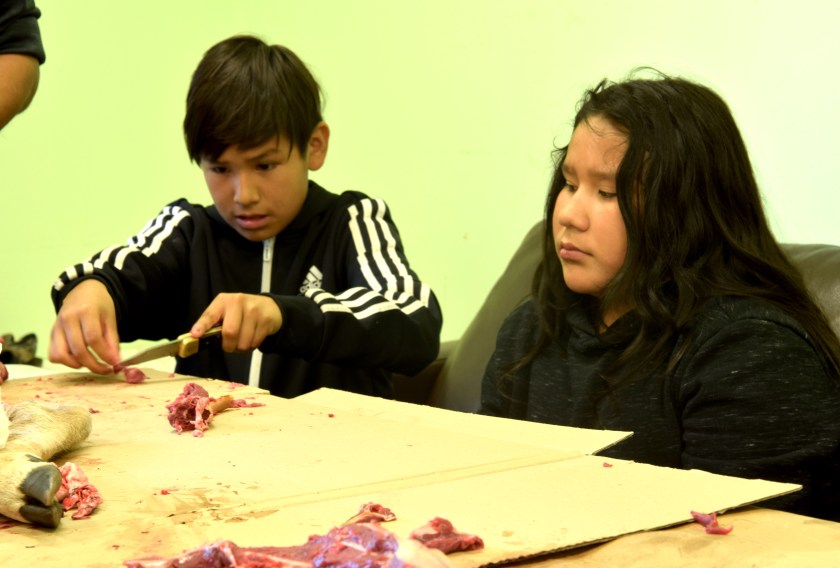
KelsiB. Carter Nash cutting up meat
Carter Nash cutting up meat (Photo Credit: Kelsi Blackhawk)

By: Ocean Sky Tom

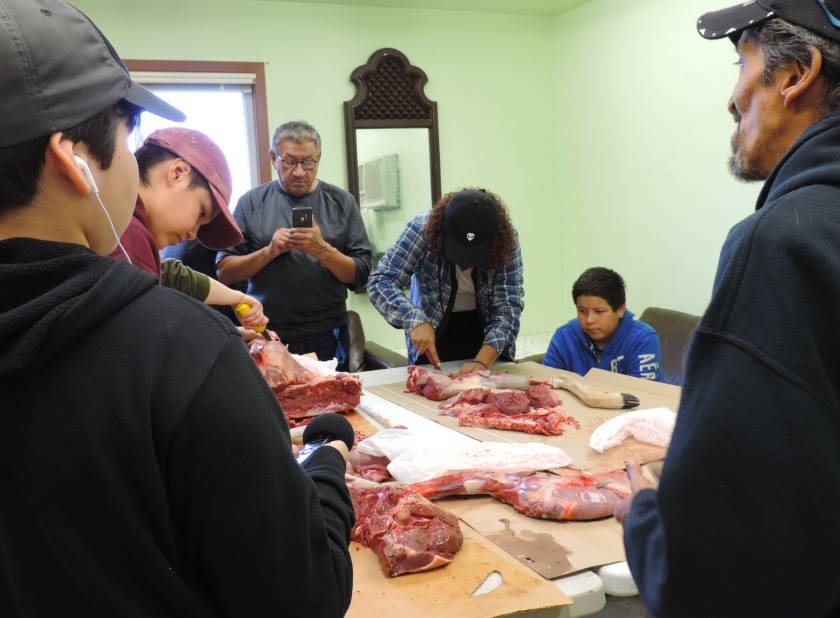
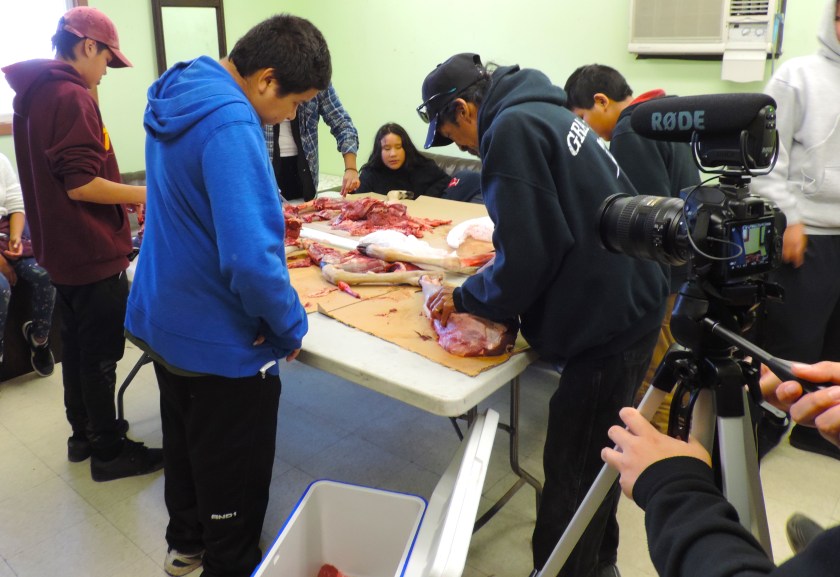
Students at Baibombeh Anishinaabe School got their hands all bloody last Thursday October 4 .

For Grade 7 and 8 Ojibwe language and land –based classes they were invited to Shawendaasowin Prevention Services to learn how to harvest a deer.

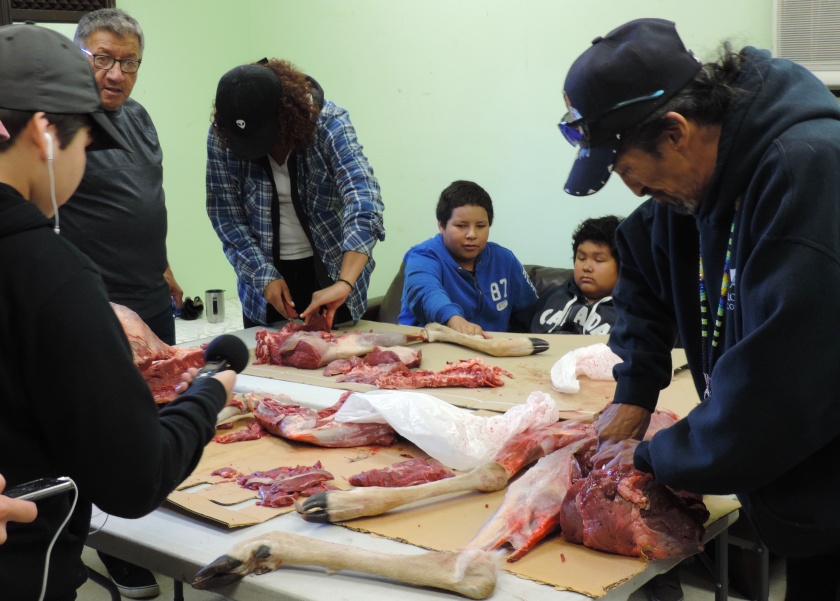
Students took turns sawing, slicing, cutting, and washing the meat. Alongside this, they were listening to cultural teachings and documenting with microphones, cameras and video cameras with the Naotkamegwanning’s community journalism trainer Karli Zschogner.

Teddy Copenace, the elementary land-based coordinator, guided them through the process, explaining the sacredness of the deer.

Kelsi Blackhawk photo credit
Student West Ranville jumps in to document audio and video as others take turns slicing deer meat, listening to teachings of Teddy Copenace (Photo Credit: Kelsi Blackhawk)

“The main protocols that I did was that we put tobacco down before we started cutting this deer up,” he said speaking to interviewer West Ranville. “This is someone’s clan and on top of that, the Creator is the one who gave us that deer for us to survive.”

He describes how the hooves are used for pow wow regalia, use the he use the hide as a drum, for moccasins, and a jacket to keep as warm

He also explains that out of respect for the animal, the skull and antlers are left with an offering of tobacco.

Teddy and West Photo Credit-Ocean Tom
Student West Ranville jumps in to document audio and video as others take turns slicing deer meat, listening to teachings of Teddy Copenace (Photo Credit: Kelsi Blackhawk)

Teacher Roland White says he was happy to students working with their hands.

“It’s part of our culture, it’s part of who who we are, to learn about animals,” he said.

Kelsi Blackhawk
Baibombeh students take turns cutting up deer meat and documenting (Photo Credit: Kelsi Blackhawk)

Lester Kavanaugh, the Senior Prevention Worker at Shawendaasowin Prevention Services hosted the space.  He says he got the deer after requesting community hunters to donate wild game.

“I am planning on doing is feeding the students at least once or twice a month hot lunch,” he said.

When interviewed, Sharia Yomi of Grade 12 said she would definitely do this again.

“It was a good experience,” she said. “So that our young know how to skin deer and know the teachings of our animals and spirits.”

Elders-In-Residence: Betty Tom

Betty Tom - photo credit Ozaawaa
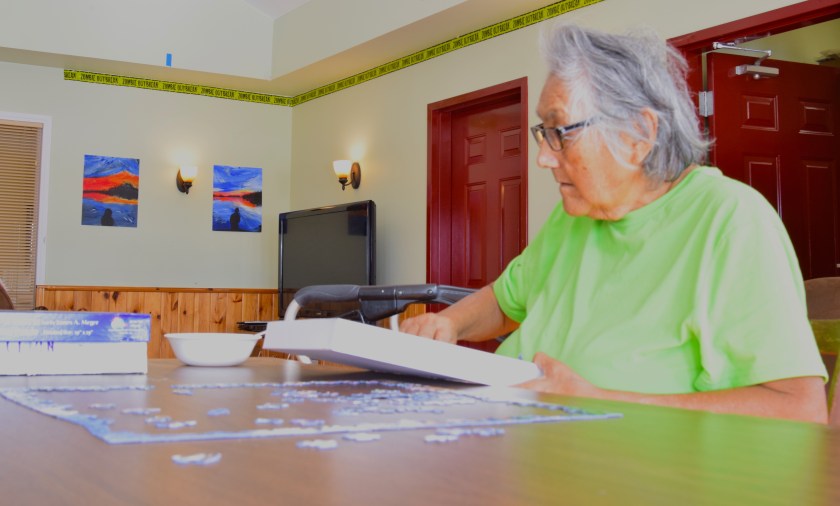
Betty Tom: Faces of Naotkamegwanning Elders-in-Residence (Photo Credit: Ozaawaa Paypompee)

By: Ozaawaa Paypompee     

Betty Tom has been living at the Naotkamegwanning Elders-in-Residence for over 5 years she said.

While she was working on an eagle puzzle, she remembered her grandson in Eagle Lake does photography. She was enjoying the nice beautiful Friday sunny day. She hoped the snow would melt for Halloween and kids should be able to trick or treat in larger spaces rather than be alone far away.   

She says she hasn’t always lived in Naotkamegwanning, originally she is from Big Island First Nation. She opened up saying she was the same age as George Kakeway, who is now a member of the Manitoba Hockey Hall of Fame and who spoke at the round house on Orange Shirt Day. She says they both attended St.Mary’s Residential School in Kenora. She says she finds it very hard rethink of those experiences.

“Love seeing their smiles”, says Naotkamegwanning fishing derby organizer dedicated to memorializing local resident

By: Damon Hunter

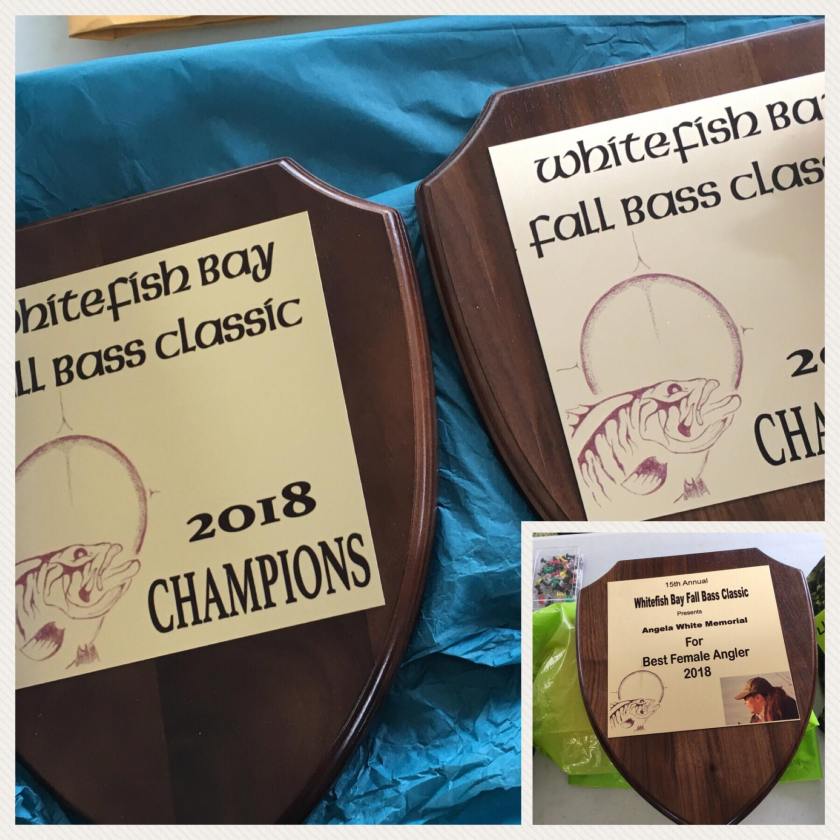
The 15th annual Whitefish Bay Fall Bass Classic was held on Oct. 6th-7th, this year in memory of the late Angela White — who sadly passed away from cancer last year.

Alana Merrick, a co-organizer of the annual fishing derby with the late White, says she has dedicated the next four years’ events in her memory.

“Angela was one of our lead organizers,” she said. “She was an avid fisherwoman”.

Angela, born in Dryden, Ontario and raised in Naotkamegwanning First Nation, was known for her work in the community including co-organizing a drug awareness walk and the Seven Grandfathers awards.

With coverage from 89.5 The Lake radio, the event attracted a large amount of participants and sponsors, including a donation from RBC Royal Bank to help fund the competition. Participants came from Northwestern Ontario, Manitoba and even Minnesota, USA.

The yearly event is completely non-profit, Merrick said, and the money made off of it is recycled for the next year’s event.

“Every cent goes to the tournament,” said Merrick. “Then we start all over again.”

Merrick said it makes her feel good hosting the event as a space for men and women of all ages and to observe the different bass species. She said the biggest unrecorded bass was 7lbs 10oz.

I love seeing their smiles and seeing their excitement.”

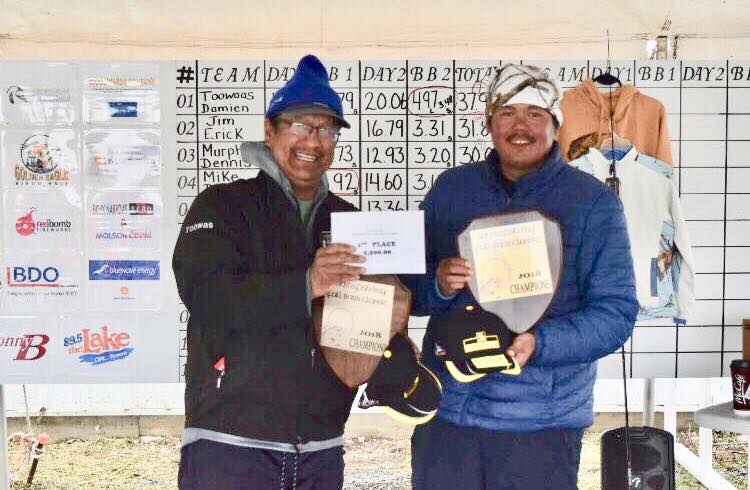
This year’s winners were Toowaas White and Damien Paypompee. They took first place with the heaviest catches consisting of nine smallmouth bass and one largemouth bass.

In second place, Erick Bennett and Jim Ducharme. Following in third, Dana Fast and Mike Miles.

1st PlaceToowass White:Damien Paypompee
This year’s winners, Toowaas White and Damien Paypompee (Photo credit: Keith Merrick)

Toowas White from Naotkamegwanning, says he has been attending the Bass Classic for 14 years and won second place in 2011 with his father-in-law.

Keith Merrick
Winners trophies (Photo credit: Keith Merrick)

Having spent much time with Angela and her family fishing, said the tournament’s dedication was deserved, considering her a “ staple at the docks and at the weigh-ins.”

“Our community had three great male/female teams compete year in and year out,” he said.”  Her passing had an affect on all the fishermen in the community”

Next year’s Fall Bass Classic is to be expected again early October.

More than just the beauty

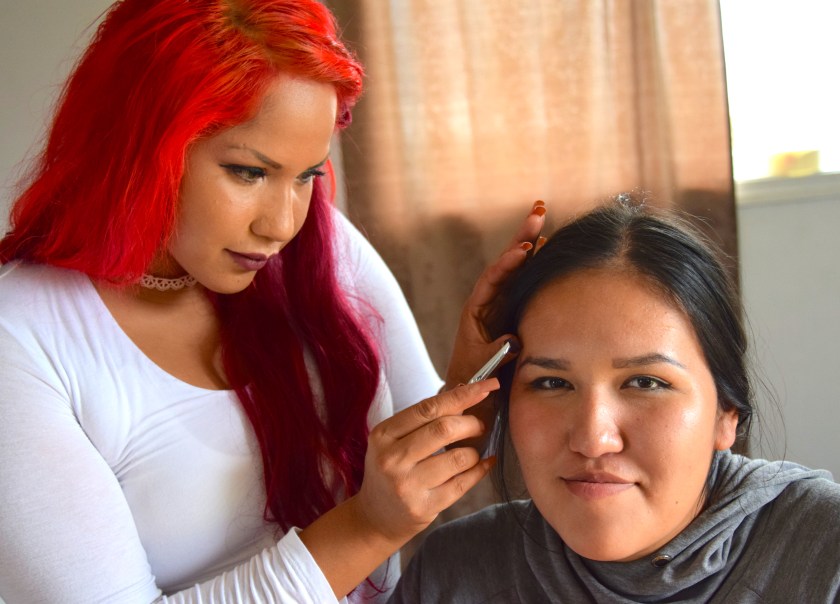
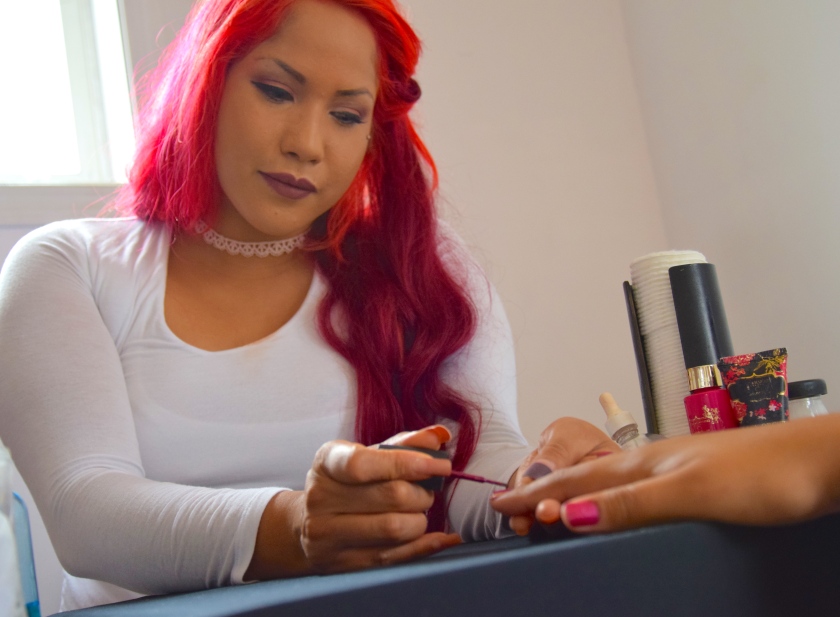
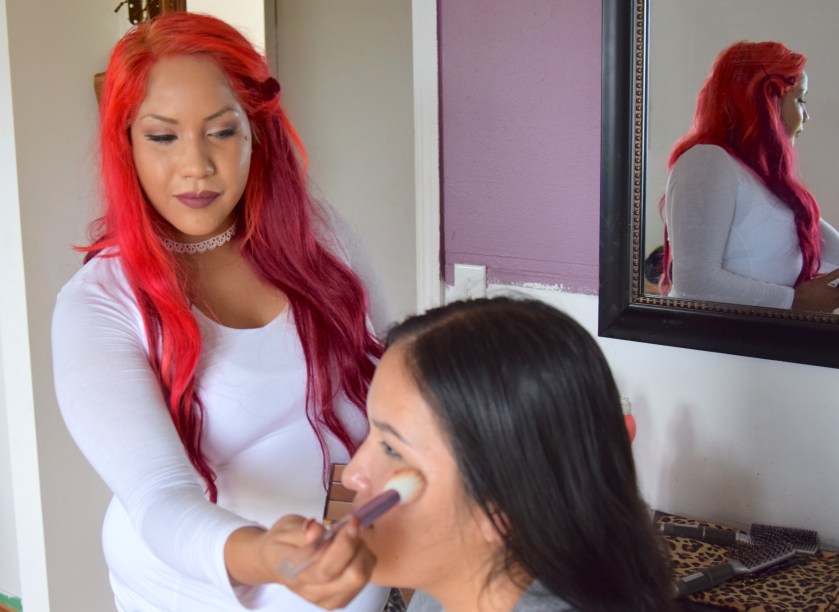
Local aesthetician Jermaine White is helping build girls’ self-esteem one nail, curl, and lip at a time.Ozaawaa2

Jermaine White helps other women build up their self-image (Photo Credit: Ozaawaa Paypompee)

I first went to Jermaine White of Naotkamegwanning earlier this month, curious if she did make-up. Sitting down with her, she made me feel good. She taught me different tips and how I can learn how to do things myself.

I am very happy, she is offering to share her many skills: nails, makeup, and hair salon cuts, colours and extensions, to help others build their confidence.

On Tuesday October 9, Ozaawaa and I went to sit down to interview her and one of her clients.

Ozaawaa1
Jermaine says she decided to channel her creativity into cosmetics (Photo Credit: Ozaawaa Paypompee)

OP: How did you come into doing makeup? 

JW: I’ve always wanted to be a makeup artist since I was young. I decided back in 2014 after I graduated from high school. I decided to Nuwave (School of Hair Design) in Thunder Bay for hair, nails and makeup.

OP: Why do you do you offer different beauty services?

JW: I’ve always had a passion for  it. I have a creative mind, so I thought I’d put my creatively to use. Why better not then to become a makeup artist!

OP: How does it make you feel?

JW: It makes me feel good to be in this makeup industry. It’s really exciting really. It makes me feel good.

OP: Why do you do this for others?

JW: To give everyone experience, what I can do and show off my skills.

OP: Where do you get your makeup from?

JW: I’ve been to three different makeup schools so everytime I go to a new school I get a new kit.

OP: Do you have any Ojibwe/Anishinaabe influence in your work?

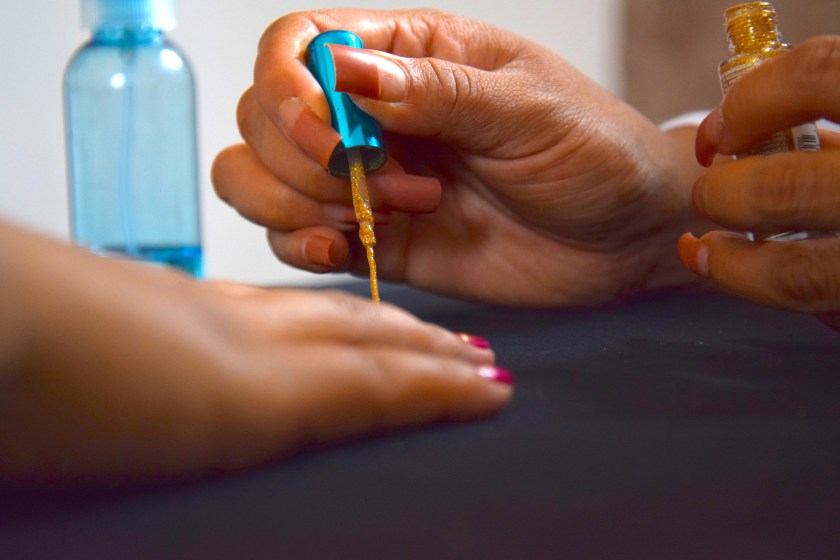
JW: When I started to get into nail design I actually tried to include nails designs, Anishinaabe flowers and floral nail artwork.

Ozaawaa

    She says she is excited to start hosting workshops called ‘Beauty for the Soul’ (Photo Credit: Ozaawaa Paypompee

OP: What does it mean to be Anishinaabe?

JW: It means to be inspiring, strong, following your heart and doing what’s best for you.

OP: What are people’s feedback when you help them?

JW: They get really excited to try something new. It’s also exciting for me when I see people’s expressions when I give them what they want, or give them something new and exciting.

OP: What is next for you? Do you have any workshops?

JW: I do these workshops, ‘Beauty for the Soul’, it includes nail polish and makeup application. I’ve been working with the community to set up workshops. I’m looking forward to setting up something soon.

Ozaawaa3
Jermaine White helps other women build up their self-image through makeup (Photo Credit: Ozaawaa Paypompee)

Cassidy Copenance does beading in the community. She says she was a client of Jermaine three years ago, sitting down to do her nails and makeup.

OP: What do you think she means for the community?

CC: I think it’s good that she is close because people don’t have to drive to Kenora. I know she has done makeup for a couple ladies’ weddings and I think that’s really good because they were thinking about her.

OP: Can you speak about her character?

CC: She is a great person. I’ve had a couple troubles of my own and she’s been there. She is just a really good person.

She’s just a really good makeup artist and she is trying to further her education.

OP: What is it about makeup or hair that empowers or uplift women?

CC: If I’m feeling really crappy then I will happen to put makeup on or do my nails and I’ll feel good about myself.

Design a site like this with WordPress.com
Get started